
Arthritis of the spine is the gradual wear of the facet joints, the small joints that link the vertebrae and allow the spine to bend and twist. As the cartilage thins, the joints become stiff and painful and may form bone spurs that crowd nearby nerves. Most patients manage spinal arthritis well with conservative care, and targeted procedures can relieve symptoms that persist.

Most spinal arthritis is managed without surgery, so care begins with the least invasive options and advances only as needed.
Non-surgical care
Minimally invasive procedures
Most procedures are performed same-day, on an outpatient basis. Your surgeon will recommend the least invasive option appropriate for your condition.

Spinal arthritis develops gradually from wear on the facet joints. Common contributing factors include:
Age-related joint wear
Cartilage thins over decades of everyday movement.
Prior spine injury
A previous fracture or strain can accelerate joint wear.
Repetitive mechanical stress
Heavy labor or high-impact activity loads the joints over time.
Elevated body weight
Extra weight increases the load on the lumbar facet joints.
Genetic predisposition
A family history of osteoarthritis raises the risk.
Loss of disc height shifts more load onto the facet joints.
For most patients it is a manageable, long-term condition. It becomes more significant when bone spurs compress a nerve or narrow the spinal canal, both of which are treatable.
The cartilage loss cannot be reversed, but pain and stiffness can often be well controlled with exercise, medication, and targeted injections. Many patients remain active for years with an appropriate plan.
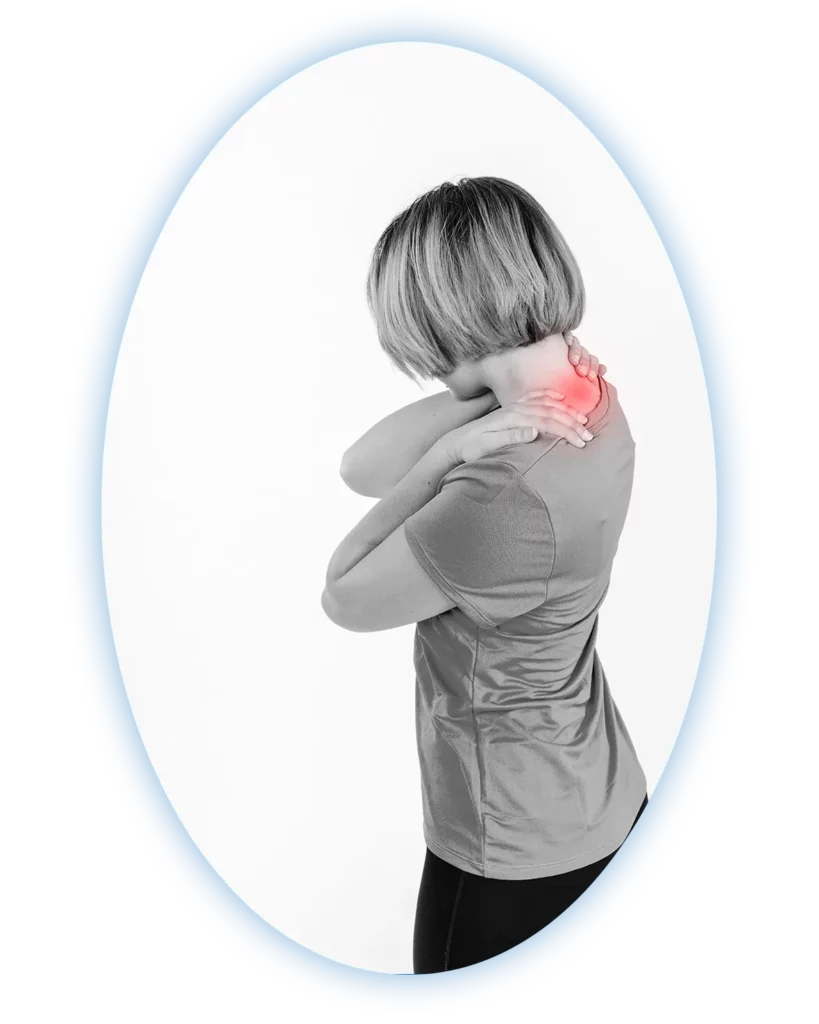
Most patients describe stiffness and aching in the back or neck that is worse in the morning or after rest and improves with gentle movement. Some notice a grinding sensation or pain that flares with activity.
There is no single best treatment. Most patients do well with a combination of physical therapy, anti-inflammatory medication, and, when indicated, facet injections or radiofrequency ablation.
Facet ablation uses targeted heat to interrupt the small medial branch nerves that carry pain signals from arthritic facet joints. Relief often lasts for several months or longer.
Usually not. Surgery is reserved for cases in which bone spurs compress a nerve and symptoms do not respond to other care, and even then the procedure is often a minimally invasive decompression.
X-rays show joint space narrowing and bone spurs, and MRI adds detail about the discs and nerves. A diagnostic facet injection or medial branch block can confirm a specific joint as the source of pain.
Injections, ablation, and most minimally invasive procedures at Total Spine and Orthopedics are performed on a same-day, outpatient basis. To schedule an evaluation in Melbourne, Orlando (Lake Nona), or Titusville, call (321) 499-4646.
Symptoms often build gradually and may come and go. Common signs include:
Arthritis can affect any level of the spine, most often the neck and lower back.
Lumbar (lower back)
Cervical (neck)
Seek immediate care for progressive weakness, foot drop, numbness in the groin or inner thighs, or any loss of bladder or bowel control.
How ultra-minimally invasive and endoscopic procedures compare with traditional open surgery, and why most patients recover faster.
When spinal arthritis needs surgery, minimally invasive techniques mean less pain, a smaller scar, and a faster return to an active lifestyle.
Hear our patients share their experience with us, All in their own words.
Expert, ultra-minimally invasive spine and orthopedic care, close to home.
Ultra-minimally invasive and endoscopic techniques
We specialize in procedures performed through incisions smaller than a dime, sparing muscle and supporting a faster recovery.
Same-day, outpatient procedures
Most patients walk in and return home within hours, rather than facing an overnight hospital stay.
Board-certified, fellowship-trained surgeons
Our team includes early leaders in endoscopic spine surgery.
A complimentary MRI review
Understand your diagnosis and options from a board-certified specialist before committing to any treatment.
Trusted by our community
More than 1,100 patient reviews at a 4.6-star average, and over 50,000 patients treated.
A full continuum of arthritis care
From injections and ablation to minimally invasive decompression, every option is handled in one place.
Comprehensive spine and orthopedic care
From injections to advanced procedures, your full continuum of care is handled in one place.
Convenient locations across the Space Coast and Orlando
Care close to home in Melbourne, Orlando (Lake Nona), and Titusville.