
Sports injuries are common among athletes and active people of every age. Whether it is a sprained ankle, a torn ligament, or a broken bone, an injury can sideline even the most seasoned athlete. Orthopedic care helps you recover, restore strength, and get back to the sport you love as quickly and safely as possible.


Treatment varies with the type and severity of the injury. Many injuries heal with conservative care.
Non-surgical care
Surgical options
Surgery is considered for severe injuries or when conservative treatment has not been effective.

Sports injuries can affect any part of the body. Some of the most common include:
Sprains and strains
Stretched or torn ligaments, muscles, or tendons, such as ankle sprains.
Fractures
Broken bones, such as ankle fractures.
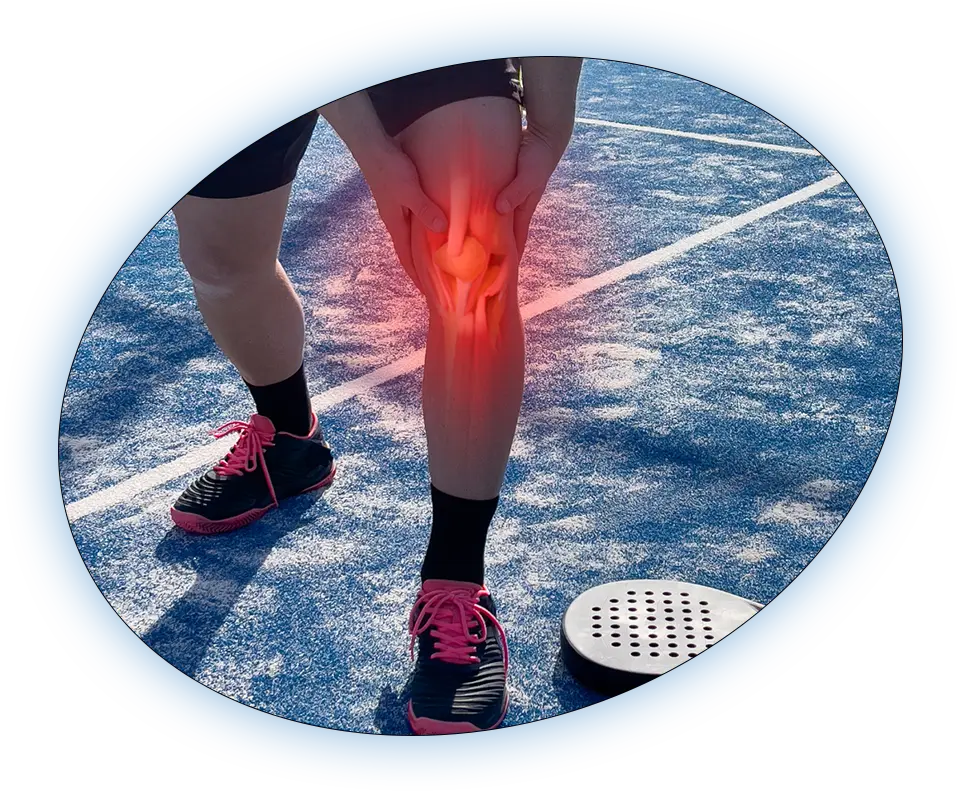
Knee injuries
Meniscus tears, ACL tears, and runner’s knee.
Shoulder injuries
Rotator cuff, labral, and SLAP tears.
Tendon injuries
Achilles tendonitis and Achilles tendon ruptures.
Dislocations
A bone forced out of its normal position.
Sprains, strains, fractures, and dislocations are the most common. Specific injuries include ankle sprains, ACL tears, meniscus tears, rotator cuff injuries, shoulder labral tears, and runner's knee.
A sprain is a stretched or torn ligament, the tissue that connects bone to bone. A strain is a stretched or torn muscle or tendon, the tissue that connects muscle to bone.
See a specialist for severe pain, rapid swelling, a visible deformity, inability to bear weight, a pop at the time of injury, numbness, or pain that does not improve within a few days.
Most do not. Many respond to rest, ice, bracing, medication, and physical therapy. Surgery such as ACL reconstruction or rotator cuff repair is considered for severe injuries or when conservative care has not worked.
It depends on the injury. A mild sprain may take days to weeks, while a ligament reconstruction often takes months of rehabilitation. A structured plan reduces the risk of reinjury.
Warming up, strength and flexibility training, proper technique, appropriate equipment and footwear, and gradual increases in training all reduce the risk.
A history of how the injury happened and a physical examination come first. X-rays show fractures, and MRI shows ligaments, tendons, cartilage, and muscles.
Total Spine and Orthopedics treats sports injuries in Melbourne, Orlando (Lake Nona), and Titusville. Call (321) 499-4646 to schedule an evaluation.
See an orthopedic specialist for a sports injury with:
How arthroscopic (keyhole) surgery of the joint compares with traditional open surgery.
Arthroscopic techniques let many sports injuries be repaired through small incisions, so rehabilitation can start sooner.
Hear our patients share their experience with us, All in their own words.
Expert, ultra-minimally invasive spine and orthopedic care, close to home.
Ultra-minimally invasive and endoscopic techniques
We specialize in procedures performed through incisions smaller than a dime, sparing muscle and supporting a faster recovery.
Same-day, outpatient procedures
Most patients walk in and return home within hours, rather than facing an overnight hospital stay.
Board-certified, fellowship-trained surgeons
Our team includes early leaders in endoscopic spine surgery.
A complimentary MRI review
Understand your diagnosis and options from a board-certified specialist before committing to any treatment.
Trusted by our community
More than 1,100 patient reviews at a 4.6-star average, and over 50,000 patients treated.
Care for every level of athlete
Whether you are a competitive athlete or a weekend warrior, we build a plan around your goals and your sport.
Comprehensive spine and orthopedic care
From injections to advanced procedures, your full continuum of care is handled in one place.
Convenient locations across the Space Coast and Orlando
Care close to home in Melbourne, Orlando (Lake Nona), and Titusville.