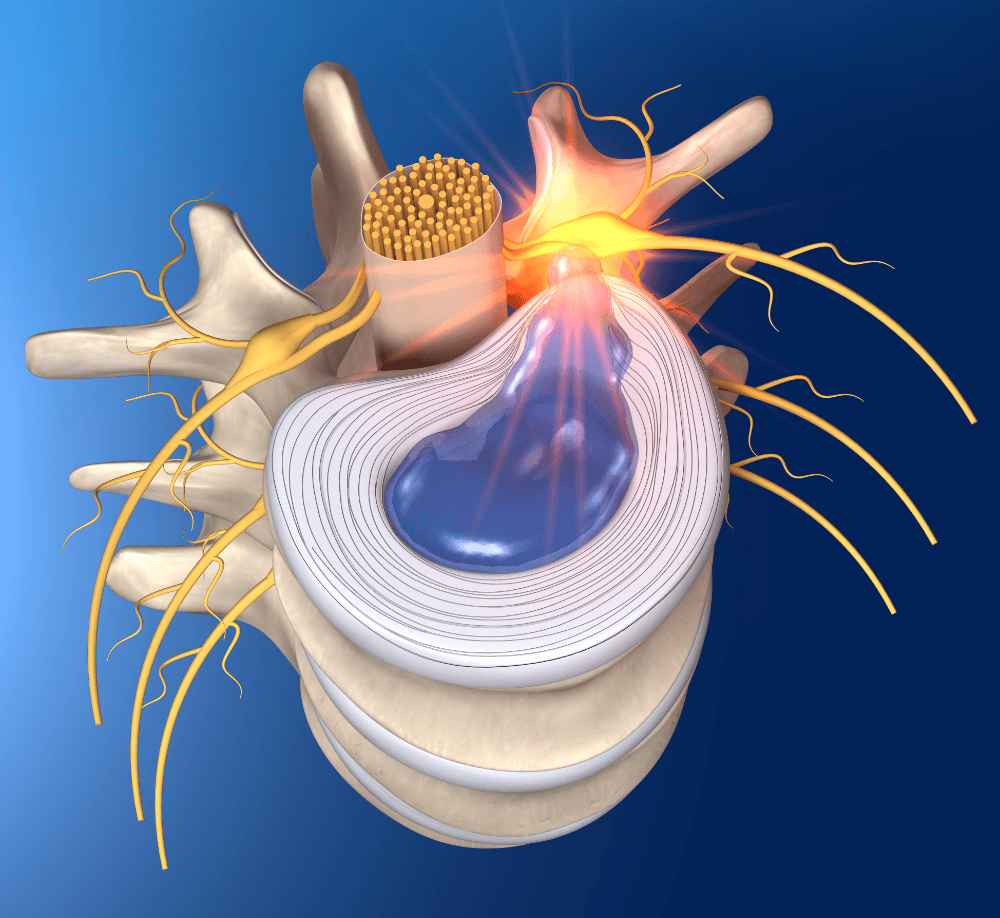
A herniated disc — often called a “slipped disc” or “ruptured disc” — occurs when the soft center of a spinal disc pushes through its tougher outer wall and presses on a nearby nerve. That pressure can cause back or neck pain, along with the numbness or tingling that may travel into an arm or leg.
Most patients improve without surgery, so care begins with the least invasive options and advances only as needed.
Non-surgical care
Minimally invasive procedures
Most procedures are performed same-day, on an outpatient basis. Your surgeon will recommend the least invasive option appropriate for your condition.
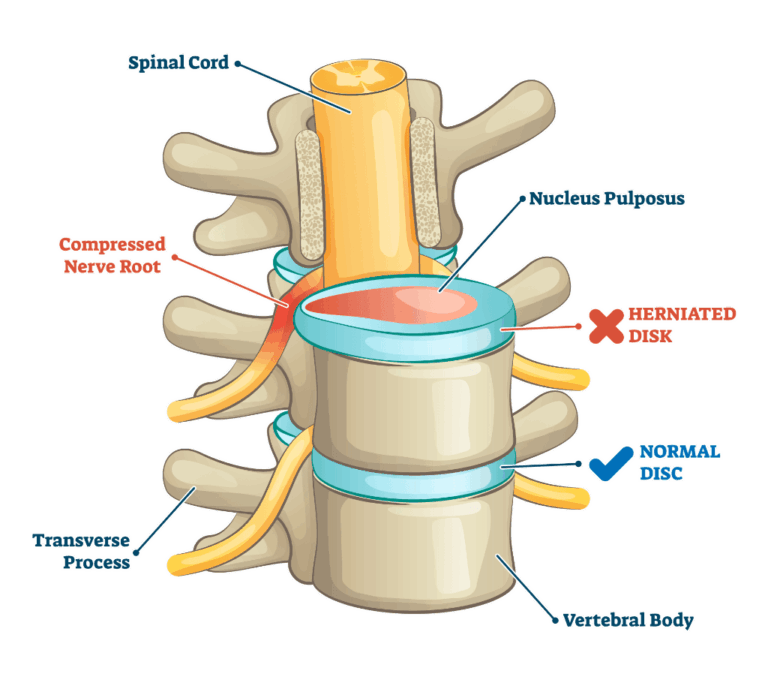
Herniated discs usually develop from a combination of age-related wear and mechanical stress on the spine. Common contributing factors include:
Age-related disc degeneration
Discs lose hydration and elasticity over time, making the outer ring more prone to tearing.
Repetitive strain or heavy lifting
Frequent bending, twisting, or lifting can stress and weaken a disc over time.
Acute injury
A fall or motor vehicle collision can cause a disc to herniate suddenly.
Elevated body weight
Extra weight increases the mechanical load on the lumbar spine.
Smoking
Reduces the disc's blood supply and nutrition, which accelerates degeneration.
Genetic predisposition
A family history can make some people more prone to disc problems.
Many herniated discs improve over several weeks to a few months as the displaced disc material resorbs and inflammation subsides, often with activity modification and physical therapy. If pain, numbness, or weakness persists beyond approximately 6 to 8 weeks or worsens, evaluation is recommended to rule out persistent nerve root compression.
Initial management is typically conservative: physical therapy, anti-inflammatory medication, activity modification, and image-guided injections such as epidural steroid injections to reduce nerve root inflammation. At Total Spine and Orthopedics, surgery is considered only after appropriate conservative measures have been tried or when symptoms are severe.
Surgery is generally considered when radicular pain, numbness, or weakness does not improve after several weeks of conservative care, or when MRI demonstrates significant nerve compression. Progressive weakness, foot drop, or any loss of bladder or bowel control are urgent indications that warrant immediate evaluation.
Endoscopic discectomy removes the herniated disc fragment through a sub-centimeter incision (smaller than a dime), using a high-definition endoscope and specialized instruments rather than the extensive muscle dissection of open surgery. Total Spine and Orthopedics specializes in this technique, which preserves the surrounding muscle and soft tissue.
In most cases, yes. The majority of minimally invasive and endoscopic herniated disc procedures at Total Spine and Orthopedics are performed on a same-day basis, with patients discharged within hours rather than admitted overnight.
Because little muscle and soft tissue are disrupted, recovery is generally faster than after open surgery. Many patients resume light daily activity within days and progress to more demanding activity over the following weeks, according to their surgeon's guidance.
Many herniated discs improve without intervention. However, sustained compression of a nerve can lead to chronic pain and, less commonly, persistent numbness or motor weakness. Symptoms that continue or worsen should be evaluated so that treatment can begin before nerve injury becomes permanent.
Diagnosis combines a clinical and neurologic examination with imaging, typically MRI, which demonstrates the disc and any nerve compression and identifies the affected level, such as L4-L5, L5-S1, or C5-C6. Total Spine and Orthopedics offers a complimentary MRI review of your diagnosis and options. To schedule an evaluation in Melbourne, Orlando (Lake Nona), or Titusville, call (321) 499-4646.
Yes. “Slipped disc” is a common, non-medical name for a herniated disc — the two describe the same condition, in which the soft center of a spinal disc pushes through its outer wall and can press on a nearby nerve. (The disc doesn’t truly slip out of place.) You may also hear it called a ruptured or prolapsed disc. A bulging disc and an annular tear are related but distinct conditions.
Symptoms depend on where the disc has herniated and whether it is pressing on a nerve. Common signs include:
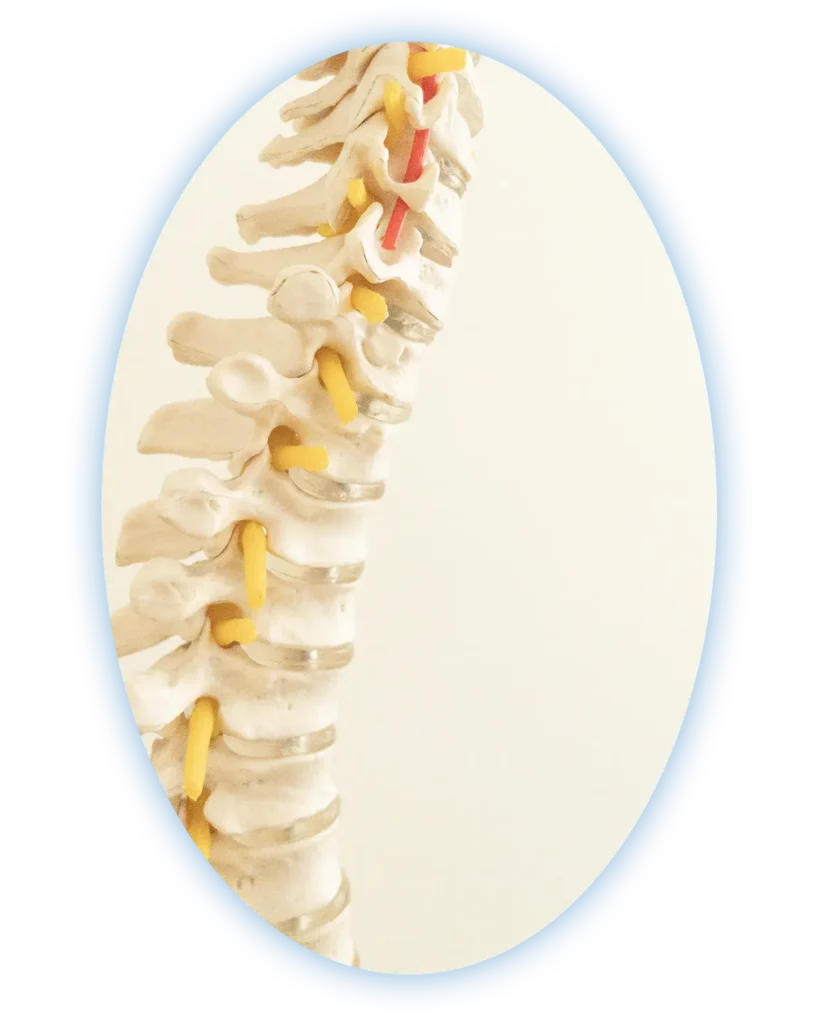
The two most common locations are the neck and the lower back; herniations in the mid-back (thoracic spine) are far less common.
Cervical (neck)
Lumbar (lower back)
How ultra-minimally invasive and endoscopic procedures compare with traditional open surgery, and why most patients recover faster.
For most patients, minimally invasive and endoscopic techniques mean less pain, a smaller scar, and a faster return to everyday life.
Hear our patients share their experience with us, All in their own words.
Expert, ultra-minimally invasive spine and orthopedic care, close to home.
Ultra-minimally invasive and endoscopic techniques
We specialize in procedures performed through incisions smaller than a dime, sparing muscle and supporting a faster recovery.
Same-day, outpatient procedures
Most patients walk in and return home within hours, rather than facing an overnight hospital stay.
Board-certified, fellowship-trained surgeons
Our team includes early leaders in endoscopic spine surgery.
A complimentary MRI review
Understand your diagnosis and options from a board-certified specialist before committing to any treatment.
Trusted by our community
More than 1,100 patient reviews at a 4.6-star average, and over 50,000 patients treated.
The least invasive option first
We begin with conservative care and recommend surgery only when it is genuinely the best path forward.
Comprehensive spine and orthopedic care
From injections to advanced procedures, your full continuum of care is handled in one place.
Convenient locations across the Space Coast and Orlando
Care close to home in Melbourne and Orlando (Lake Nona).