
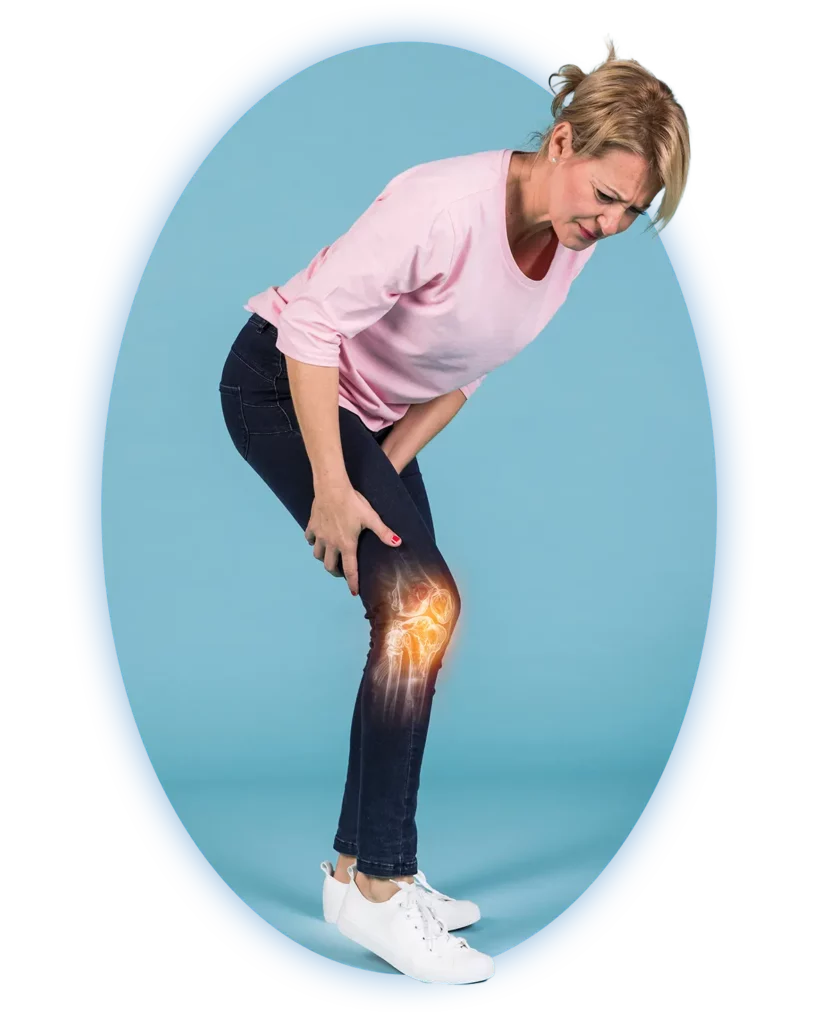
Knee pain is a common symptom with many possible causes, from sports injuries and tendonitis to arthritis. Because the right treatment depends on the source, an accurate diagnosis by an orthopedic specialist is the first step. Most knee pain is managed without surgery, and minimally invasive options are available when the joint needs repair or replacement.

Many cases of knee pain are treated with conservative care, injections, or medication. Surgery is needed only in selected cases.
Non-surgical care
Surgical options
Our team includes physicians specializing in both minimally invasive treatments and orthopedic surgery, so care is matched to your diagnosis.

Knee pain can follow an injury or develop gradually. Common causes include:
Wear of the joint cartilage causes pain, stiffness, and swelling.
A torn cartilage cushion can cause catching, locking, and swelling.
Ligament injuries
Sprains and tears of the ACL, MCL, or other ligaments.
Tendonitis
Inflammation of the patellar or quadriceps tendon from overuse.
Pain around or behind the kneecap.
Gout and inflammatory arthritis
Crystal deposits or inflammation in the joint.
Common causes include osteoarthritis, meniscus tears, ligament sprains or tears, tendonitis, runner's knee (patellofemoral pain), and gout. Injuries and age-related wear account for most cases.
See a specialist if knee pain lasts more than a few weeks, keeps returning, or comes with swelling, locking, catching, or the knee giving way. Seek prompt care after an injury with a pop, rapid swelling, or inability to bear weight.
Yes. Many patients improve with activity modification, physical therapy, anti-inflammatory medication, bracing, and injections. Surgery is reserved for structural problems that do not respond to these measures.
Locking or catching often signals a mechanical problem inside the joint, such as a torn meniscus or a loose fragment of cartilage. An examination and MRI can confirm the cause.
Arthroscopy uses a small camera and slim instruments inserted through a few small incisions to diagnose and treat problems inside the knee, such as meniscus tears and ligament injuries. Most patients go home the same day.
Knee replacement is considered when arthritis has worn the joint and pain limits daily life despite conservative care. Total Spine and Orthopedics offers minimally invasive knee replacement, with smaller incisions and a faster recovery.
A physical examination tests stability, range of motion, and tenderness. X-rays show arthritis and alignment, and MRI shows the meniscus, cartilage, ligaments, and tendons.
Total Spine and Orthopedics treats knee pain in Melbourne, Orlando (Lake Nona), and Titusville. Call (321) 499-4646 to schedule an evaluation.
If chronic knee pain lasts for an extended period, it is important to find the root cause. See a specialist for:
How minimally invasive knee replacement compares with the traditional approach.
When arthritis has worn the knee beyond repair, minimally invasive knee replacement can restore comfortable movement with smaller incisions and a faster recovery.
Hear our patients share their experience with us, All in their own words.
Expert, ultra-minimally invasive spine and orthopedic care, close to home.
Ultra-minimally invasive and endoscopic techniques
We specialize in procedures performed through incisions smaller than a dime, sparing muscle and supporting a faster recovery.
Same-day, outpatient procedures
Most patients walk in and return home within hours, rather than facing an overnight hospital stay.
Board-certified, fellowship-trained surgeons
Our team includes early leaders in endoscopic spine surgery.
A complimentary MRI review
Understand your diagnosis and options from a board-certified specialist before committing to any treatment.
Trusted by our community
More than 1,100 patient reviews at a 4.6-star average, and over 50,000 patients treated.
Orthopedic and minimally invasive care together
Our physicians specialize in both non-surgical treatment and orthopedic surgery, so your plan fits your diagnosis.
Comprehensive spine and orthopedic care
From injections to advanced procedures, your full continuum of care is handled in one place.
Convenient locations across the Space Coast and Orlando
Care close to home in Melbourne, Orlando (Lake Nona), and Titusville.