
Knee ligament reconstruction, also known as knee ligament repair, replaces a damaged knee ligament with a healthy tendon to restore stability. The procedure depends on which ligament is injured; ACL reconstruction, for instance, is typically performed in a minimally invasive way using an arthroscope.


There are many ligaments in the knee, and identifying the damaged ligament is critical to choosing the right procedure:
ACL
Anterior cruciate ligament
The most common reconstruction, typically arthroscopic.
PCL
Posterior cruciate ligament
Restores stability at the back of the knee.
PLC
Posterolateral corner
Repairs the complex of structures on the outer back of the knee.
LCL and MCL
Collateral ligaments
Reconstruct the ligaments on the outer and inner sides of the knee.

ACL reconstruction is typically arthroscopic and outpatient:
Anesthesia
You are made comfortable for the procedure.
Arthroscopy
Small incisions allow a camera to view the inside of the knee.
Preparing the graft
A tendon graft is prepared to replace the torn ligament.
Placing the graft
The graft is positioned through small tunnels in the bone and secured.
Rehabilitation
Physical therapy restores motion, strength, and stability.
Knee ligament reconstruction, also called knee ligament repair, replaces a torn knee ligament with a healthy tendon graft to restore stability.
Procedures include ACL (anterior cruciate ligament), PCL (posterior cruciate ligament), PLC (posterolateral corner), LCL (lateral collateral ligament), and MCL (medial collateral ligament) reconstruction.
Yes. ACL reconstruction is typically performed in a minimally invasive way using an arthroscope.
A popping noise or sensation, intense pain that stops activity, rapid swelling, limited range of motion, and a feeling that the knee gives way.
No. Some ligament injuries, especially many MCL tears, heal with bracing and therapy. Reconstruction is considered for unstable knees or when returning to pivoting sports.
The new ligament is made from a tendon graft, taken from your own body or from a donor. Your surgeon will discuss the best option for you.
Rehabilitation is gradual. Many patients walk with support within days and progress through physical therapy over several months before returning to sports.
A physical examination tests the stability of each ligament, and MRI confirms which ligament is torn. Call (321) 499-4646 to schedule.
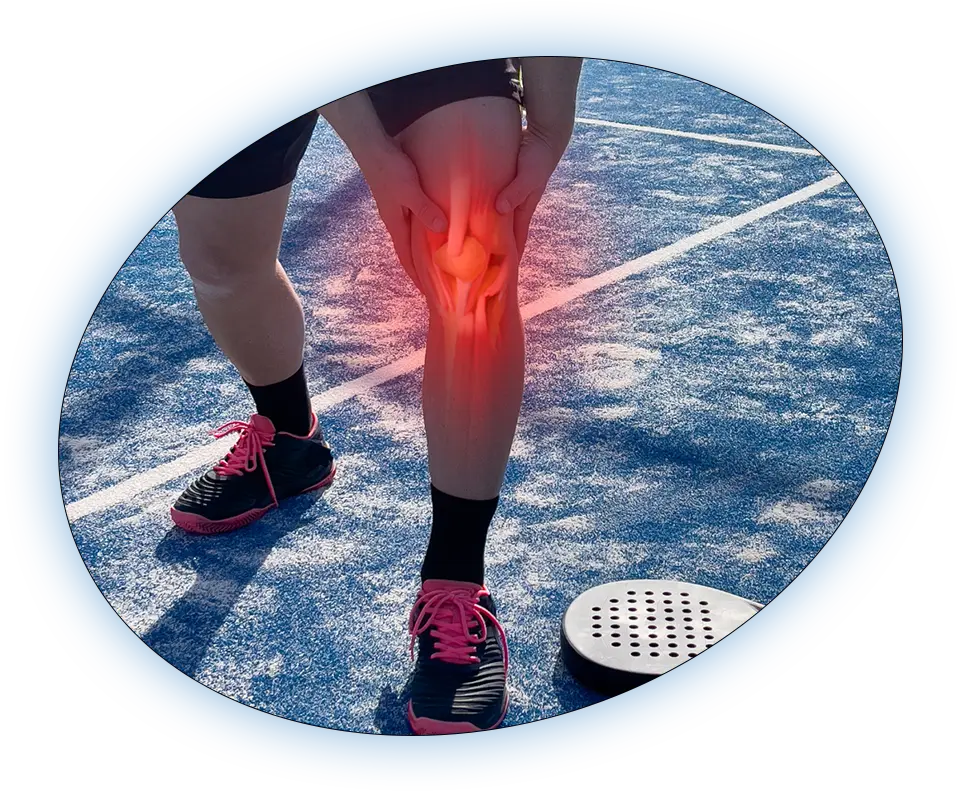
Common symptoms of a knee injury that may require ligament reconstruction include:
How arthroscopic (keyhole) surgery of the knee compares with traditional open surgery.
ACL reconstruction is typically performed arthroscopically, through small incisions, so rehabilitation can begin sooner.
Hear our patients share their experience with us, All in their own words.
Expert, ultra-minimally invasive spine and orthopedic care, close to home.
Ultra-minimally invasive and endoscopic techniques
We specialize in procedures performed through incisions smaller than a dime, sparing muscle and supporting a faster recovery.
Same-day, outpatient procedures
Most patients walk in and return home within hours, rather than facing an overnight hospital stay.
Board-certified, fellowship-trained surgeons
Our team includes early leaders in endoscopic spine surgery.
A complimentary MRI review
Understand your diagnosis and options from a board-certified specialist before committing to any treatment.
Trusted by our community
More than 1,100 patient reviews at a 4.6-star average, and over 50,000 patients treated.
Experts in knee injuries
Our orthopedic physicians are experienced in diagnosing and treating all kinds of knee injuries.
Comprehensive spine and orthopedic care
From injections to advanced procedures, your full continuum of care is handled in one place.
Convenient locations across the Space Coast and Orlando
Care close to home in Melbourne, Orlando (Lake Nona), and Titusville.