
Shoulder Labral Tears
Shoulder labral tears are a common injury that can cause pain and limited mobility in the shoulder. The labrum is a ring of cartilage around the socket of the shoulder blade (scapula) that deepens the socket and stabilizes the joint. Many tears improve with physical therapy, and arthroscopic surgery can repair tears that cause persistent pain or instability.

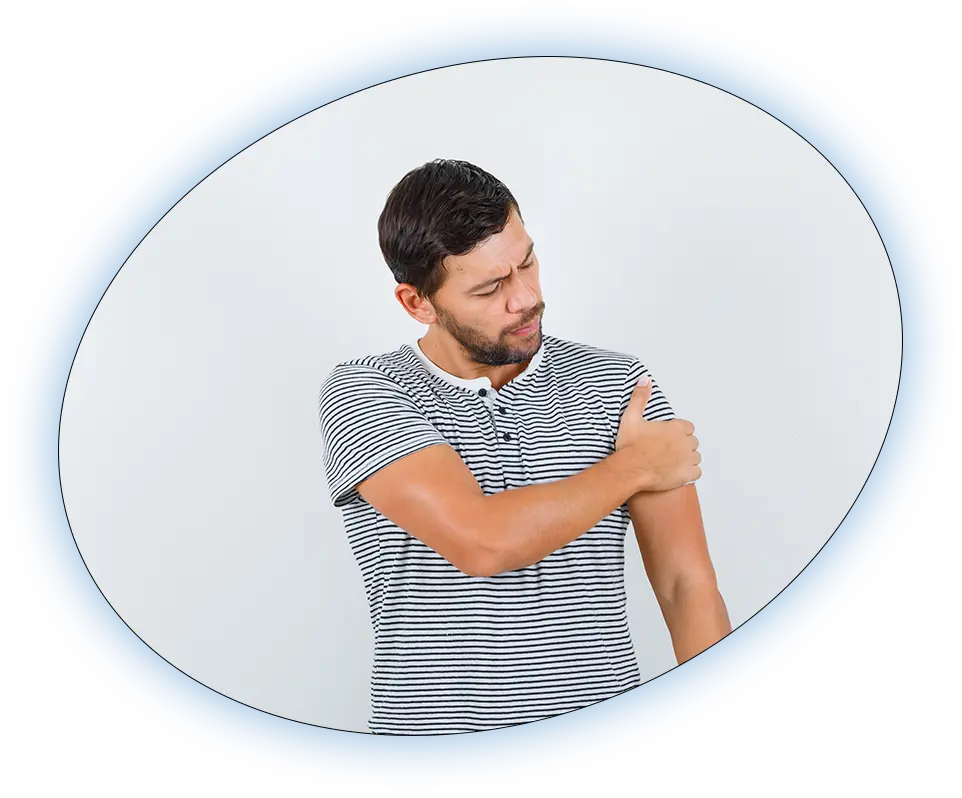
What Is A Shoulder Labral Tear?
Treatments For Shoulder Labral Tears
Most patients begin with conservative care. Surgery is recommended when it is not effective.
Non-surgical care
- Physical therapy. Improves shoulder strength and mobility, reducing pain and instability.
- NSAIDs. Over-the-counter pain relievers reduce pain and inflammation.
- Corticosteroid injections. Reduce inflammation and pain in some cases.
- Activity modification. Limiting overhead and throwing activities while symptoms settle.
Surgical options
- Shoulder arthroscopy. Repairs the torn labrum to the bone, or removes a frayed tear.
After surgery, physical therapy restores strength and range of motion.
How a Shoulder Labral Tear is Diagnosed

What Causes Shoulder Labral Tears?
There are several potential causes of shoulder labral tears, including:
Traumatic injury
A direct blow to the shoulder or a fall on an outstretched arm.
Shoulder dislocation
The ball forced out of the socket can tear the labrum.
Overuse
Repetitive overhead activities such as throwing or lifting weights.
Degenerative changes
The labrum becomes worn and brittle with age.
Sudden pulling
A sudden pull on the arm, such as catching a heavy object.
Shoulder instability
A loose joint stresses the labrum with everyday motion.
Types Of Labral Tears
Labral tears are named for where they occur around the socket.
SLAP tear
Top of the labrum
Where the biceps tendon attaches; common in throwing athletes.
Bankart tear
Front and lower labrum
Usually follows a shoulder dislocation and can cause instability.
Posterior tear
Back of the labrum
Less common; seen in contact sports and weightlifting.
Learn more about SLAP tears.
Frequently Asked Questions
What is the shoulder labrum?
The labrum is a ring of cartilage around the socket of the shoulder blade (the glenoid). It deepens the shallow socket, stabilizes the joint, and anchors the biceps tendon and shoulder ligaments.
What does a shoulder labral tear feel like?
Common symptoms include shoulder pain, especially with overhead activity, weakness, a popping, clicking, or catching sensation, and sometimes a feeling that the shoulder may slip out.
What are the types of shoulder labral tears?
A SLAP tear involves the top of the labrum. A Bankart tear involves the front-lower labrum, usually after a dislocation. Posterior tears involve the back of the labrum.
Can a shoulder labral tear heal without surgery?
Many tears, especially degenerative ones, improve with physical therapy, medication, and injections. Tears that cause repeated instability or persistent pain may need surgery.
How is a shoulder labral tear diagnosed?
A physical examination with specific shoulder tests, along with MRI or MR arthrography, which uses contrast dye in the joint, shows the labrum in detail.
What surgery is used for a labral tear?
Shoulder arthroscopy is used to repair the labrum back to the bone, or to trim a frayed tear, through small incisions.
How long is recovery after labral repair?
Most patients use a sling for several weeks, followed by physical therapy. Return to sports, especially throwing, often takes several months.
Where can I be seen for a shoulder injury?
Total Spine and Orthopedics treats shoulder injuries in Melbourne, Orlando (Lake Nona), and Titusville. Call (321) 499-4646 to schedule.
Symptoms Of A Shoulder Labral Tear
Common symptoms include:
- Pain in the shoulder, especially with overhead activities.
- Weakness in the shoulder.
- Popping, clicking, or catching in the shoulder.
- Instability, a sense that the shoulder may slip out.
- Decreased range of motion and reduced throwing performance.

Related Conditions
When A Labral Tear Needs Surgery
The Arthroscopic Advantage
How arthroscopic (keyhole) surgery of the shoulder compares with traditional open surgery.
Arthroscopic labral repair restores the shoulder's stability through small incisions, with a quicker start to rehabilitation.
Our Patients Stories
Hear our patients share their experience with us, All in their own words.
Why Choose Total Spine and Orthopedics
Expert, ultra-minimally invasive spine and orthopedic care, close to home.
Ultra-minimally invasive and endoscopic techniques
We specialize in procedures performed through incisions smaller than a dime, sparing muscle and supporting a faster recovery.
Same-day, outpatient procedures
Most patients walk in and return home within hours, rather than facing an overnight hospital stay.
Board-certified, fellowship-trained surgeons
Our team includes early leaders in endoscopic spine surgery.
A complimentary MRI review
Understand your diagnosis and options from a board-certified specialist before committing to any treatment.
Trusted by our community
More than 1,100 patient reviews at a 4.6-star average, and over 50,000 patients treated.
Experts in shoulder care
Our physicians diagnose and treat all kinds of shoulder problems, from therapy to arthroscopic repair.
Comprehensive spine and orthopedic care
From injections to advanced procedures, your full continuum of care is handled in one place.
Convenient locations across the Space Coast and Orlando
Care close to home in Melbourne, Orlando (Lake Nona), and Titusville.
Schedule your visit online