
Shoulder replacement surgery, also known as shoulder arthroplasty, relieves pain and improves function in people with severe shoulder arthritis or a shoulder injury. The damaged parts of the joint are replaced with artificial components, after non-surgical treatments such as therapy and injections have been tried.

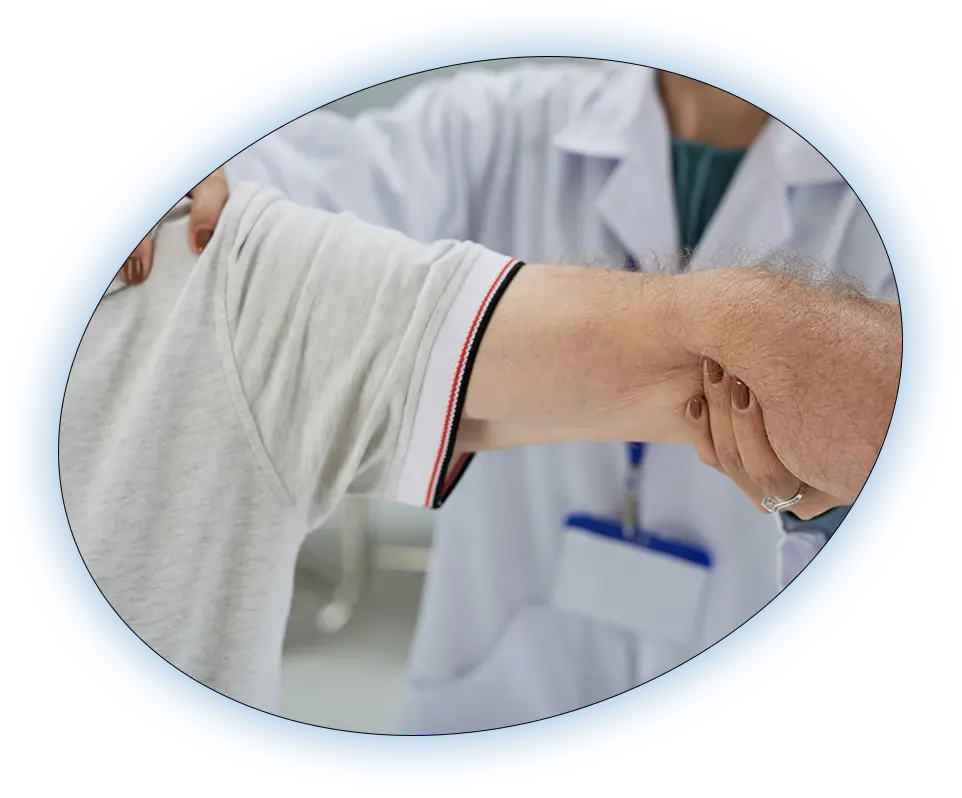
Shoulder replacement surgery may be recommended for:

Shoulder arthroplasty follows these steps:
Anesthesia
You are made comfortable for the procedure.
Removing damaged tissue
Through an incision in the shoulder, the damaged bone and cartilage are removed.
Placing the implants
The artificial components are inserted into the joint and secured.
Closing
The incision is closed and the shoulder is placed in a sling.
Rehabilitation
Physical therapy restores strength and range of motion.
Recovery varies with the individual and the extent of surgery.
Weeks 0 to 6
Sling and protection
The shoulder rests in a sling while it heals, with gentle motion as directed.
Weeks 6 to 12
Physical therapy
Therapy restores strength and range of motion.
Several months
Normal activities
Most people return to normal activities.
Up to a year
Full healing
Full function may take up to a year to return.
Shoulder replacement, also called shoulder arthroplasty, replaces the damaged parts of the shoulder joint with artificial components, typically metal and plastic, to relieve pain and improve function.
It treats severe shoulder arthritis, certain large rotator cuff tears, and fractures that cannot be treated with less invasive procedures.
Yes. Physical therapy, medication, and corticosteroid injections often provide relief. Shoulder replacement is considered in more severe cases.
The surgeon makes an incision in the shoulder, removes the damaged bone and cartilage, and secures the artificial components in the joint. The shoulder is then placed in a sling.
The shoulder is typically placed in a sling for several weeks to allow healing.
Most people return to normal activities within several months, but it may take up to a year for the shoulder to fully heal and regain full function.
Potential complications include infection, bleeding, blood clots, and nerve damage. An experienced orthopedic surgeon helps minimize these risks.
An orthopedic evaluation with X-rays and other imaging determines whether replacement is appropriate. Call (321) 499-4646.
Shoulder arthroplasty is highly effective, but like any surgery it carries risks, including:

Hear our patients share their experience with us, All in their own words.
Expert, ultra-minimally invasive spine and orthopedic care, close to home.
Ultra-minimally invasive and endoscopic techniques
We specialize in procedures performed through incisions smaller than a dime, sparing muscle and supporting a faster recovery.
Same-day, outpatient procedures
Most patients walk in and return home within hours, rather than facing an overnight hospital stay.
Board-certified, fellowship-trained surgeons
Our team includes early leaders in endoscopic spine surgery.
A complimentary MRI review
Understand your diagnosis and options from a board-certified specialist before committing to any treatment.
Trusted by our community
More than 1,100 patient reviews at a 4.6-star average, and over 50,000 patients treated.
Experienced orthopedic surgeons
Our team helps minimize surgical risks and guides you through recovery.
Comprehensive spine and orthopedic care
From injections to advanced procedures, your full continuum of care is handled in one place.
Convenient locations across the Space Coast and Orlando
Care close to home in Melbourne, Orlando (Lake Nona), and Titusville.