
Sciatica is not a condition on its own. It describes pain caused by compression or irritation of the sciatic nerve or the nerve roots that form it. Pain usually begins in the lower back and radiates through the hip and buttock and down the leg, sometimes with numbness, tingling, or weakness. Most sciatica improves with conservative care, and minimally invasive treatment can relieve the pressure when it does not.

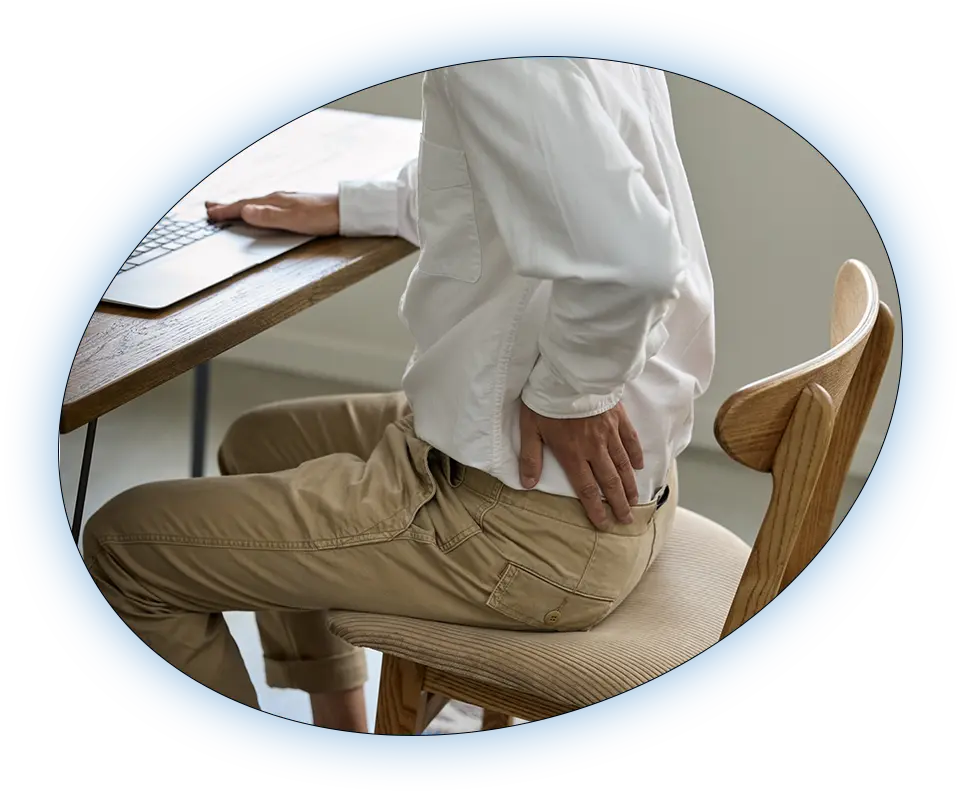
Your physician will determine whether sciatica is acute or chronic. Treatment ranges from self-care to minimally invasive procedures.
Non-surgical care
Minimally invasive procedures
Most procedures are performed same-day, on an outpatient basis. Your surgeon will recommend the least invasive option appropriate for your condition.

Sciatica may develop with age or after trauma such as a car or work accident, sports injury, or fall. The primary cause is a nerve pinched by a herniated disc. Other common causes include:
Disc material presses on a lumbar nerve root.
Bone spurs
Osteophytes from spinal arthritis narrow the nerve's path.
Narrowing of the canal or nerve openings.
A slipped vertebra pinches the nerve root.
Piriformis irritation
A tight buttock muscle can irritate the sciatic nerve outside the spine.
Injury
Falls, accidents, and sports injuries.
The nerve root involved shapes where symptoms are felt in the leg.
L4 root
L3-L4 level
Front of the thigh and inner shin.
L5 root
L4-L5 level
Outer leg and top of the foot; may weaken the big toe or cause foot drop.
S1 root
L5-S1 level
Back of the calf, heel, and outer foot.
See also foot drop, which can accompany L5 compression.
Sciatica describes pain that travels along the sciatic nerve, from the lower back through the buttock and down the leg. It is a symptom of an underlying problem, most often a compressed nerve root in the lower back.
Many episodes of sciatica improve within four to six weeks with conservative care. Symptoms that persist longer, keep returning, or include weakness should be evaluated.
A herniated disc pressing on a lower lumbar nerve root, usually at L4-L5 or L5-S1, is the most common cause. Spinal stenosis, bone spurs, and spondylolisthesis are other causes.
Sciatica usually affects one leg. Symptoms in both legs can point to central spinal stenosis or a large disc herniation and should be evaluated promptly.
Seek immediate care for sciatica with progressive leg weakness, foot drop, numbness in the groin or inner thighs, or any loss of bladder or bowel control, which can signal cauda equina syndrome.
Most sciatica improves without surgery. A procedure such as endoscopic discectomy is considered when pain persists despite conservative care or when there is significant or progressive weakness.
Short walks, gentle stretching, heat or ice, and over-the-counter anti-inflammatory medication help many people. Avoid prolonged bed rest and long periods of sitting.
Most minimally invasive and endoscopic procedures for sciatica at Total Spine and Orthopedics are performed on a same-day, outpatient basis. To schedule an evaluation in Melbourne, Orlando (Lake Nona), or Titusville, call (321) 499-4646.
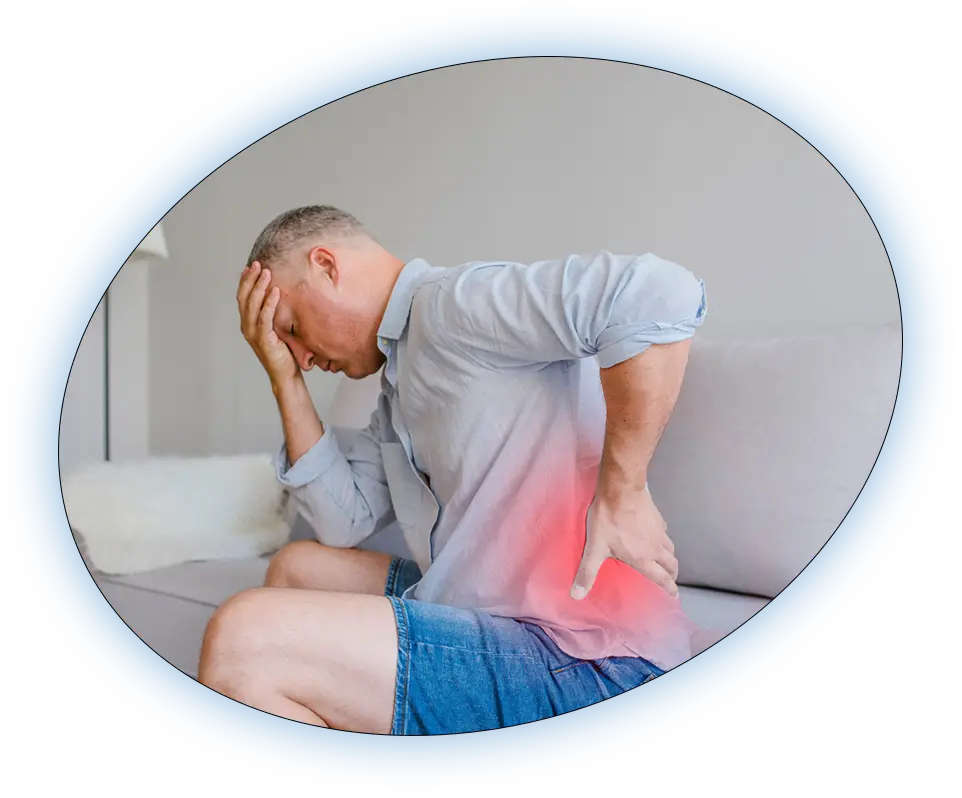
Sciatica usually affects one side of the body. Common symptoms include:
How ultra-minimally invasive and endoscopic procedures compare with traditional open surgery, and why most patients recover faster.
When sciatica needs a procedure, endoscopic and minimally invasive techniques mean less pain, a smaller scar, and a faster return to everyday life.
Hear our patients share their experience with us, All in their own words.
Expert, ultra-minimally invasive spine and orthopedic care, close to home.
Ultra-minimally invasive and endoscopic techniques
We specialize in procedures performed through incisions smaller than a dime, sparing muscle and supporting a faster recovery.
Same-day, outpatient procedures
Most patients walk in and return home within hours, rather than facing an overnight hospital stay.
Board-certified, fellowship-trained surgeons
Our team includes early leaders in endoscopic spine surgery.
A complimentary MRI review
Understand your diagnosis and options from a board-certified specialist before committing to any treatment.
Trusted by our community
More than 1,100 patient reviews at a 4.6-star average, and over 50,000 patients treated.
Treating the cause, not just the leg pain
We find which nerve root is compressed and why, then relieve the pressure with the least invasive option.
Comprehensive spine and orthopedic care
From injections to advanced procedures, your full continuum of care is handled in one place.
Convenient locations across the Space Coast and Orlando
Care close to home in Melbourne, Orlando (Lake Nona), and Titusville.