
A bulging disc happens when a spinal disc flattens and extends past its normal edge while its tough outer wall stays intact. Many bulging discs cause no symptoms at all. When a bulge presses on a nearby nerve, it can cause back or neck pain, along with numbness or tingling that may travel into an arm or leg.
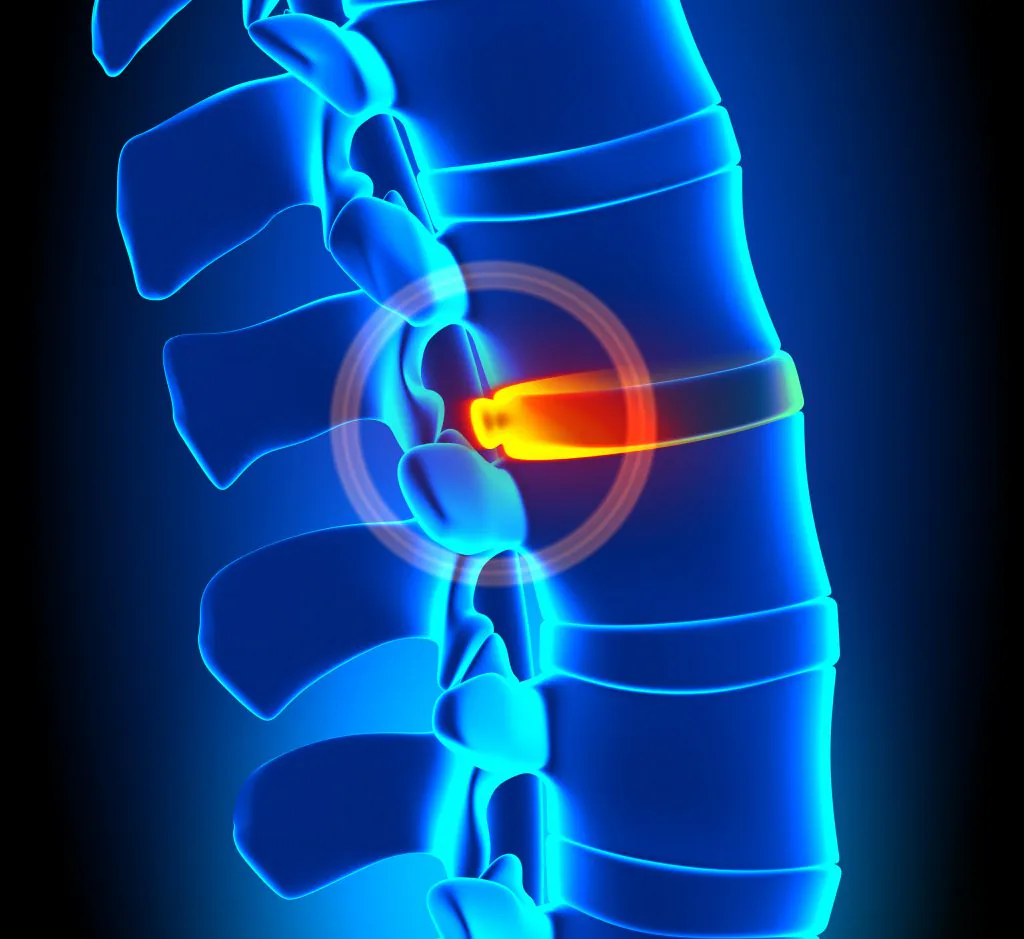
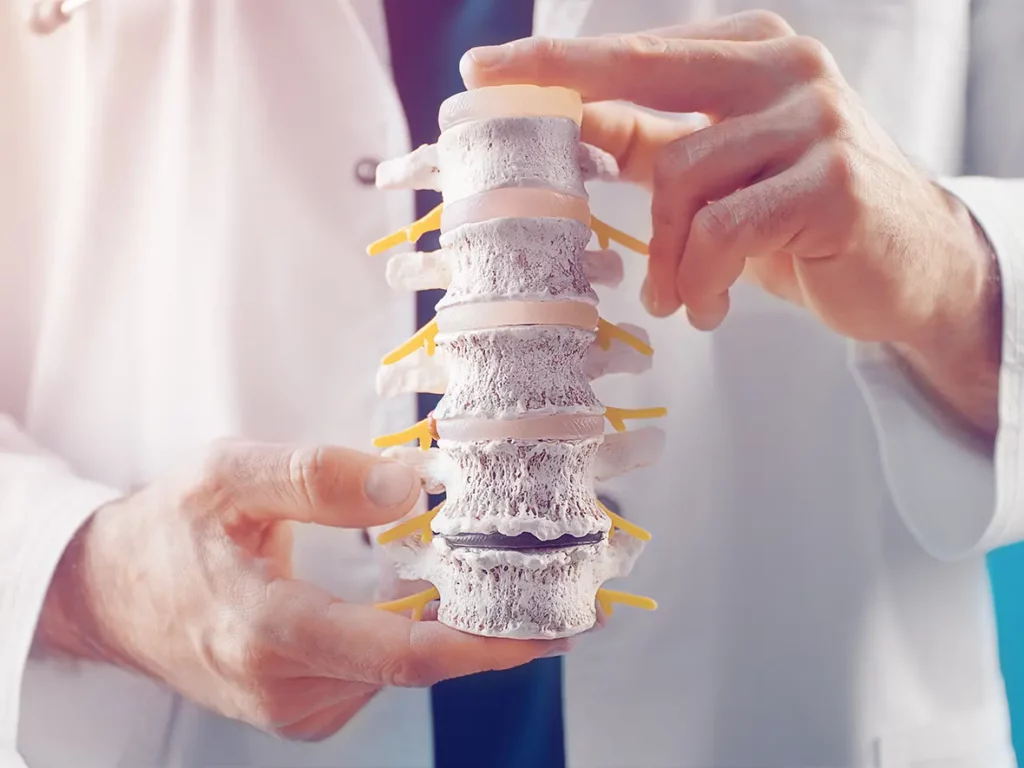
The two terms are often confused. Both involve a disc pushing past its normal boundary; the difference is whether the outer wall is still intact.
Bulging disc
Contained
The outer wall stays intact
Herniated disc
Non-contained
The outer wall has torn
What matters most is not the label but whether the disc is pressing on a nerve and causing symptoms. Learn more about herniated discs.
Most bulging discs improve without surgery, so care begins with the least invasive options and advances only as needed.
Non-surgical care
Minimally invasive procedures
Most procedures are performed same-day, on an outpatient basis. Your surgeon will recommend the least invasive option appropriate for your condition.

Bulging discs usually result from years of wear on the spine, and certain habits and risk factors can speed that process up. Common contributing factors include:
Age-related disc degeneration
Discs lose water and elasticity over time, and genetics can make some people prone to earlier wear.
Repetitive strain or heavy lifting
Frequent bending, twisting, lifting, or high-impact sports stress the discs.
Poor posture
Long hours of slouched sitting or standing put uneven pressure on the discs.
Excess weight or inactivity
Extra weight and weak core muscles increase the load on the lower spine.
Injury or trauma
A fall, collision, or sports injury can weaken a disc's outer wall.
Tobacco use
Reduces the disc's blood supply and nutrition, which accelerates degeneration.
Lowering your risk: keep a healthy weight, stay active with low-impact exercise that strengthens the core, stretch gently, keep good posture, lift with your legs, and avoid tobacco. Even with good habits, bulging discs can still develop with age.
Often it is not. Many bulging discs cause no symptoms and need no treatment. A bulge becomes significant when it presses on a nerve and causes pain, numbness, or weakness.
A bulging disc extends outward while its outer wall stays intact (contained). In a herniated disc, the soft inner material has pushed through a tear in the outer wall (non-contained). A herniation is more likely to press on a nerve, but both can cause symptoms.
Symptoms from a bulging disc often improve over time with conservative care. The bulge itself may not return to its original shape, but many patients become symptom-free.
Rarely. Most bulging discs respond to conservative care such as physical therapy and medication. A procedure is considered only when a bulge clearly compresses a nerve and symptoms do not improve.
Many people feel nothing. When a bulge irritates a nerve, it can cause a dull or sharp ache in the back or neck, plus pain, numbness, tingling, or weakness that travels into an arm or leg.
Most bulging discs occur in the lower back, especially at the L4-L5 and L5-S1 levels, where they can cause sciatica. The neck is the next most common location.
A physical and neurologic exam is combined with imaging, usually MRI. Because bulges are common in people without pain, a specialist matches the MRI findings to your symptoms. Total Spine and Orthopedics offers a complimentary MRI review.
In most cases, yes. When a procedure is needed, the majority of minimally invasive and endoscopic procedures at Total Spine and Orthopedics are performed on a same-day, outpatient basis. To schedule an evaluation in Melbourne, Orlando (Lake Nona), or Titusville, call (321) 499-4646.
Many bulging discs cause no symptoms. When a bulge presses on a nearby nerve, common signs include:
Symptoms depend on where the bulging disc is. Most occur in the lower back, and the neck is the next most common location.
Lumbar (lower back)
Cervical (neck)
Seek immediate care for progressive weakness, foot drop, numbness in the groin or inner thighs, or any loss of bladder or bowel control.

How ultra-minimally invasive and endoscopic procedures compare with traditional open surgery, and why most patients recover faster.
When a bulging disc does need a procedure, minimally invasive and endoscopic techniques mean less pain, a smaller scar, and a faster return to everyday life.
Hear our patients share their experience with us, All in their own words.
Expert, ultra-minimally invasive spine and orthopedic care, close to home.
Ultra-minimally invasive and endoscopic techniques
We specialize in procedures performed through incisions smaller than a dime, sparing muscle and supporting a faster recovery.
Same-day, outpatient procedures
Most patients walk in and return home within hours, rather than facing an overnight hospital stay.
Board-certified, fellowship-trained surgeons
Our team includes early leaders in endoscopic spine surgery.
A complimentary MRI review
Understand your diagnosis and options from a board-certified specialist before committing to any treatment.
Trusted by our community
More than 1,100 patient reviews at a 4.6-star average, and over 50,000 patients treated.
Matching your imaging to your symptoms
Because bulges are common on MRI, we confirm the disc is the true source of your pain before recommending any treatment.
Comprehensive spine and orthopedic care
From injections to advanced procedures, your full continuum of care is handled in one place.
Convenient locations across the Space Coast and Orlando
Care close to home in Melbourne, Orlando (Lake Nona), and Titusville.