
Wound Care
Foot wounds can become serious quickly, especially for people with diabetes, neuropathy, circulation problems, or a history of foot ulcers. Careful wound care relieves pressure, prevents infection, and helps the skin heal. Early treatment lowers the risk of complications and helps keep you on your feet.

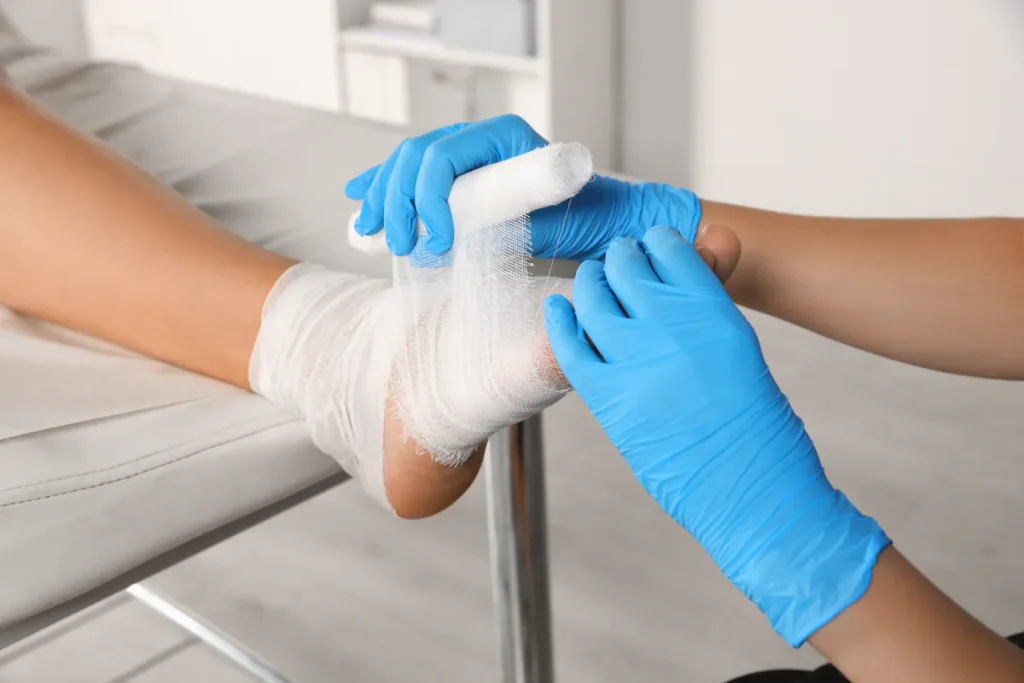
Why Foot Wounds Need Special Care
How Foot Wounds Are Treated
Wound healing depends on relieving pressure, caring for the wound itself, controlling infection, and supporting good blood flow.
Wound care
- Debridement. Removing dead or damaged tissue so healthy tissue can grow.
- Dressings. Chosen for the wound and changed on a regular schedule.
- Offloading. Casts, boots, padding, or inserts that take pressure off the wound.
- Infection control. Cultures and targeted antibiotics when infection is suspected.
Healing and prevention
- Circulation assessment. Checking blood flow and referring for vascular care when needed.
- Protective footwear and orthotics. Redistribute pressure to prevent new wounds.
- Regular monitoring. Tracking the wound until it closes.
- Minimally invasive procedures. Remove a bony pressure point that keeps a wound from healing.
Good blood sugar control and quitting smoking also make a real difference in how well foot wounds heal.
How Foot Wounds Are Evaluated

Common Causes Of Foot Wounds
Foot wounds can develop for many reasons, often more than one at a time:
Neuropathy
Reduced feeling lets small injuries go unnoticed.
Poor circulation
Less blood flow slows healing.
Pressure points
Bunions, hammertoes, and other deformities that rub in shoes.
Ill-fitting footwear
Blisters and sores from shoes that rub or pinch.
Minor injuries
Cuts, burns, and blisters that are not cared for.
Bone and joint changes
Such as Charcot foot, which creates new pressure points.
Protecting Your Feet
Daily habits are the best protection against foot wounds, especially if you have diabetes or neuropathy.
- 1
Check your feet every day
Look for blisters, redness, cuts, cracks, or drainage. Use a mirror or ask for help if needed.
- 2
Keep feet clean and dry
Wash daily and dry carefully, especially between the toes.
- 3
Moisturize carefully
Moisturize dry heels, but not between the toes.
- 4
Wear protective shoes
Never walk barefoot, and check inside shoes before putting them on.
- 5
Do not treat it yourself
Have corns, calluses, and ingrown nails cared for by a specialist.
This information is for educational purposes only and is not a substitute for a consultation with a licensed healthcare professional.
Frequently Asked Questions
What kinds of foot wounds need specialist care?
Any wound that is slow to heal, keeps coming back, or shows signs of infection should be seen. This is especially important for people with diabetes, neuropathy, or poor circulation.
Why do foot wounds heal slowly with diabetes?
Neuropathy reduces feeling, so wounds go unnoticed and keep getting pressure. Reduced circulation slows healing and makes infection harder to fight.
What is debridement?
Debridement is the removal of dead, damaged, or infected tissue from a wound. It helps healthy tissue grow and is often repeated as the wound heals.
What is offloading?
Offloading means taking pressure off a wound so it can heal, using casts, boots, special shoes, padding, or inserts. It is one of the most important parts of healing a foot ulcer.
How long does a foot ulcer take to heal?
It varies widely with the wound's size and depth, circulation, blood sugar control, and how well pressure is relieved. Many ulcers take several weeks to months.
What are signs that a foot wound is infected?
Increasing redness, warmth, swelling, drainage or pus, a bad odor, new pain, or fever. An infected foot wound needs prompt attention.
Can foot wounds be prevented?
Daily foot checks, well-fitting protective shoes, good blood sugar control, and regular visits with a foot specialist all lower the risk, especially with diabetes.
When is surgery needed for a foot wound?
When a bony prominence or deformity keeps causing pressure, a small procedure to remove that pressure can help a stubborn ulcer heal and keep it from coming back.
When To Seek Care For A Foot Wound
Have a foot wound evaluated promptly if you notice:
- A wound that is not healing or getting smaller after a week or two.
- Redness, warmth, or swelling spreading around the wound.
- Drainage, pus, or odor from the wound.
- New pain, or a fever which can mean infection.
- Any wound at all if you have diabetes, neuropathy, or poor circulation.

Related Conditions
Our Patients Stories
Hear our patients share their experience with us, All in their own words.
Why Choose Total Spine and Orthopedics
Expert, ultra-minimally invasive spine and orthopedic care, close to home.
Ultra-minimally invasive and endoscopic techniques
We specialize in procedures performed through incisions smaller than a dime, sparing muscle and supporting a faster recovery.
Same-day, outpatient procedures
Most patients walk in and return home within hours, rather than facing an overnight hospital stay.
Board-certified, fellowship-trained surgeons
Our team includes early leaders in endoscopic spine surgery.
A complimentary MRI review
Understand your diagnosis and options from a board-certified specialist before committing to any treatment.
Trusted by our community
More than 1,100 patient reviews at a 4.6-star average, and over 50,000 patients treated.
Foot and wound care specialists
Our foot and ankle team provides wound care and diabetic foot management to help wounds heal and prevent new ones.
Comprehensive spine and orthopedic care
From injections to advanced procedures, your full continuum of care is handled in one place.
Convenient locations across the Space Coast and Orlando
Care close to home in Melbourne, Orlando (Lake Nona), and Titusville.
Schedule your visit online