Stem Cell Therapy

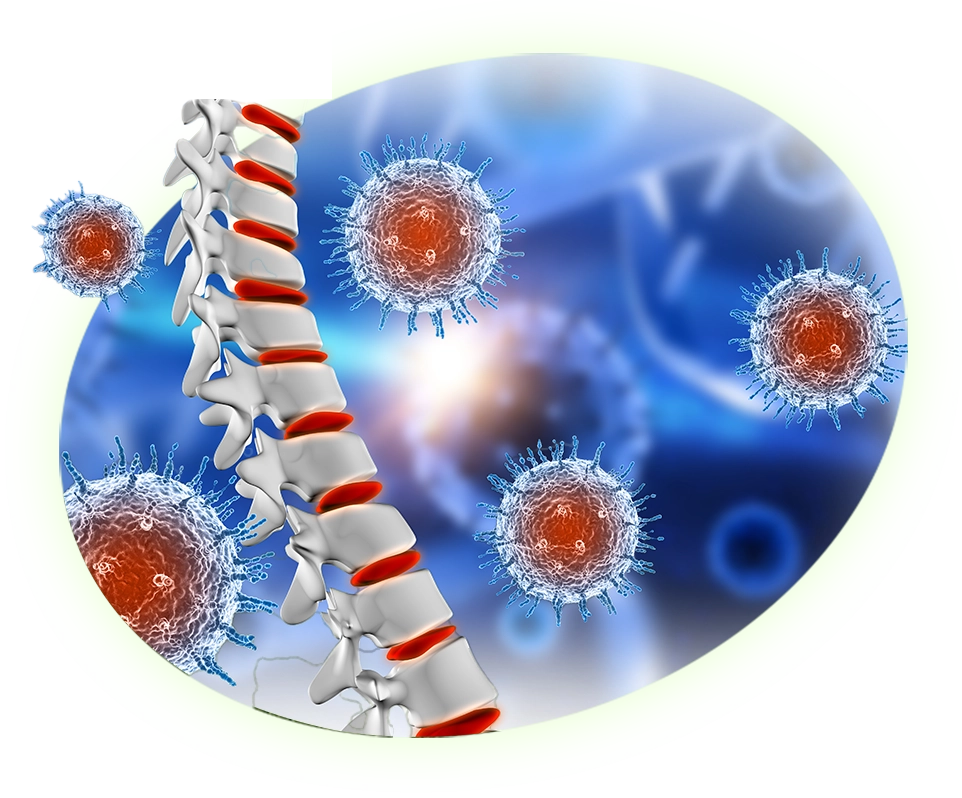
Our board certified physicians use a combined procedure of endoscopic discectomy and stem cell therapy to offer a revolutionary approach to treating herniated discs and minimizing the risk of reherniation.

What can Stem Cells Treat?

Regenerative medicine aims to repair damaged tissue rather than only manage symptoms. At Total Spine, stem cell therapy is used mainly in disc regeneration, often alongside an endoscopic discectomy, to support the body's own healing.

Where it may help

  • Herniated discs. Supporting healing after a discectomy and strengthening the annulus fibrosus.
  • Lowering reherniation risk. Reinforcing the repaired disc so it is less likely to herniate again.
  • Adjacent discs and facet joints. Helping maintain the levels next to the one treated.
  • Osteoarthritis. Mesenchymal stem cells are a promising area of regenerative care.

The cells we use

  • Autologous only. We use your own cells, so there is no donor material involved.
  • Bone marrow stem cells. Drawn from your own bone marrow.
  • Adipose stromal cells (SVF). Derived from your own fat tissue.
  • Goal. To improve hydration and potentially reverse some degenerative changes in the disc.

Stem cell therapy is not right for everyone. Your physician will review your history and imaging and recommend it only when it is an appropriate option for your condition.

How Does Stem Cell Therapy Work?

Because the therapy uses your own cells, the process is built around collecting, preparing, and delivering them. Here is what it generally involves.

  1. 1
    Consultation and imaging review
    What happens

    We review your history and imaging to determine whether regenerative treatment is appropriate for you.

    Why it matters

    Not everyone is a candidate, so this step protects you from a treatment that would not help.

  2. 2
    Collecting your own cells
    What happens

    Your cells are collected from your own bone marrow or from adipose (fat) tissue, depending on your plan.

    Why it matters

    Using autologous cells means no donor material is involved.

  3. 3
    Preparing the cells
    What happens

    The sample is processed to concentrate the stem and stromal cells for treatment.

    Timing

    Bone marrow cases run about 2.5 hours start to finish; adipose cases about 4 hours.

  4. 4
    Delivering the therapy
    What happens

    The prepared cells are delivered to the treatment area, often alongside an endoscopic discectomy.

    Why it matters

    Pairing the two aims to support healing and lower the risk of reherniation.

Your physician will walk you through the specifics of your plan, including which cell source is right for you.
Am I A Candidate?

Not everyone is a good candidate for stem cell treatment. Regenerative care may be worth exploring when the following are true. The only way to know is an evaluation of your history and imaging.

Disc-related back or neck pain

A herniated or degenerating disc that is a source of ongoing pain.

Osteoarthritis

Joint wear where mesenchymal stem cells may be a regenerative option.

Planning an endoscopic discectomy

Regenerative therapy can be paired with surgery to support healing and lower reherniation risk.

Looking for a tissue-first approach

You want an option that aims to repair tissue, not only manage symptoms.

Generally healthy tissue to draw from

Because we use your own cells, your overall health is part of the assessment.

You have recent imaging

An MRI helps us judge whether regenerative care fits your diagnosis.

We offer a complimentary consultation and imaging review to determine whether stem cell therapy is appropriate for you.

Frequently Asked Questions

What is regenerative medicine?

Regenerative medicine aims to replace or repair damaged tissue rather than rely solely on symptom management. It includes approaches such as tissue engineering and cellular therapies. Stem cell therapy is one form of regenerative medicine.

Whose cells are used in stem cell therapy?

We use only autologous cells, meaning the patient's own cells. We utilize bone marrow stem cells and stromal cells derived from adipose (fat) tissue. Because the cells come from your own body, there is no donor material involved.

Is stem cell therapy FDA approved?

Procedures that use a patient's own tissue are considered part of a physician's practice of medicine, which allows the physician and patient to freely consider the options they prefer. The FDA does provide guidelines for the treatment and manipulation of a patient's own tissues, and we adhere to them by offering same-day treatment using your own unaltered cells, which are inserted during the procedure. Your physician will explain exactly what your treatment involves during your consultation.

How does stem cell therapy work?

Stem cells are undifferentiated cells that can develop into specialized cell types and help repair damaged tissue. They may work in three ways: differentiating into the cell types needed for repair, secreting growth factors and proteins that stimulate the surrounding cells, and helping to modulate the immune response and reduce inflammation.

What conditions can stem cell therapy help with?

At Total Spine, stem cell therapy is used mainly in disc regeneration, often alongside an endoscopic discectomy, to support healing of a herniated disc, lower the risk of reherniation, and help maintain the discs and facet joints adjacent to the treated level. Mesenchymal stem cells are also a promising area of care for osteoarthritis. Not every patient is a candidate.

How long does the procedure take?

It depends on the cell source. A procedure using bone marrow stem cells is usually about 2.5 hours from start to finish, while one using adipose (fat-derived) stromal cells is generally around 4 hours from start to finish.

Am I a candidate for stem cell therapy?

Not everyone is a good candidate for stem cell treatment. The best way to find out is an evaluation of your history and imaging. Total Spine and Orthopedics offers a complimentary consultation and imaging review to determine whether regenerative options are appropriate for you.

We can help you with the following conditions:

Schedule your visit online

Take the next step and schedule an appointment today

This field is for validation purposes and should be left unchanged.
Name(Required)
Do you want to be contacted via text message?
This field is hidden when viewing the form