
Nail fungus, also called onychomycosis, is a common infection of the toenails. It can cause nails to become thick, brittle, discolored, or misshapen, and it rarely clears up on its own. Treatment can improve the look and comfort of your nails and is especially important for people with diabetes or poor circulation.

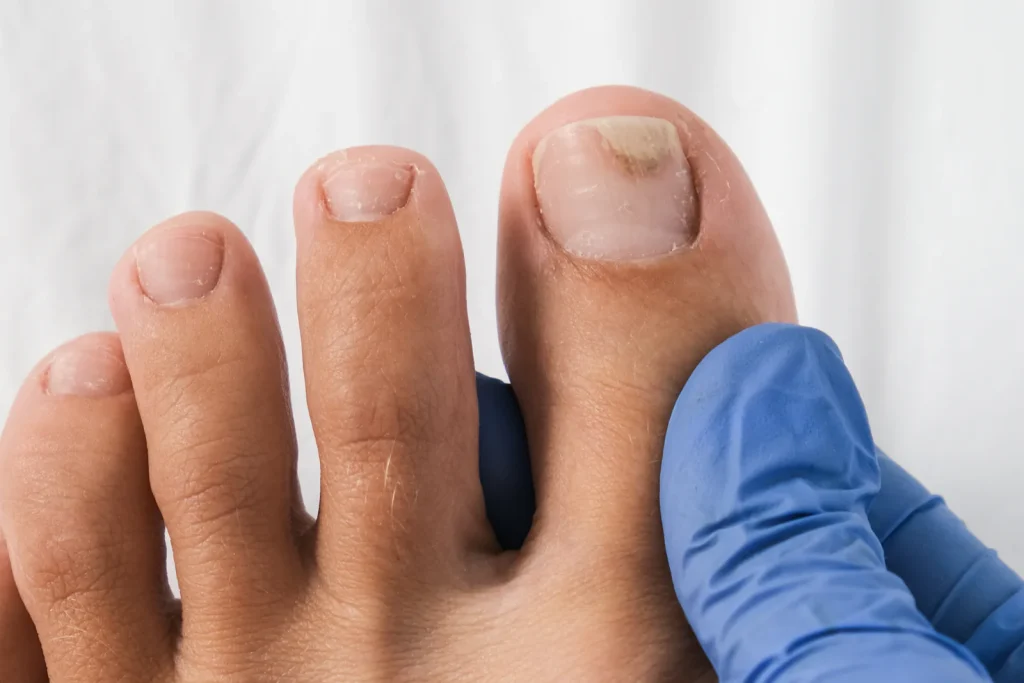
Treatment depends on how many nails are involved, how severe the infection is, and your overall health.
Treatment options
Preventing it from returning
Nail fungus takes time to clear. A healthy nail must grow out fully, which can take many months for a toenail.

Anyone can develop nail fungus, but some factors make it more likely:
Age
Nails grow more slowly and thicken with age.
Diabetes and poor circulation
Make infections more likely and harder to clear.
Athlete's foot
The fungus can spread from the skin to the nails.
Damp, closed shoes
Sweaty feet and shoes create a warm, moist environment.
Shared spaces
Walking barefoot in locker rooms, pools, and showers.
Nail injury
Damaged nails let fungi in more easily.
Nail fungus, or onychomycosis, is a fungal infection of the nail. It most often affects the toenails and causes thickened, brittle, discolored, or misshapen nails.
The fungi thrive in warm, moist places like locker rooms, pools, and sweaty shoes. They can enter through small cracks in the nail or skin, and athlete's foot can spread to the nails.
It can spread, both to other nails and to other people, through shared floors, showers, towels, and nail tools.
Rarely. Without treatment it usually persists and can slowly spread to other nails or worsen.
Toenails grow slowly, so it often takes many months for a clear, healthy nail to grow out fully, even when treatment is working.
Other conditions, such as nail injury and psoriasis, can look similar. A specialist can confirm the diagnosis, sometimes with a nail sample, before treatment begins.
Thick, sharp nails can injure the surrounding skin, and the infection can open the door to bacterial infection. With diabetes or poor circulation, that can lead to serious foot problems.
Yes. Keeping feet dry, wearing breathable shoes, treating athlete's foot, and wearing sandals in shared showers lower the risk of it returning.
Nail fungus usually develops slowly. Common signs include:

Hear our patients share their experience with us, All in their own words.
Expert, ultra-minimally invasive spine and orthopedic care, close to home.
Ultra-minimally invasive and endoscopic techniques
We specialize in procedures performed through incisions smaller than a dime, sparing muscle and supporting a faster recovery.
Same-day, outpatient procedures
Most patients walk in and return home within hours, rather than facing an overnight hospital stay.
Board-certified, fellowship-trained surgeons
Our team includes early leaders in endoscopic spine surgery.
A complimentary MRI review
Understand your diagnosis and options from a board-certified specialist before committing to any treatment.
Trusted by our community
More than 1,100 patient reviews at a 4.6-star average, and over 50,000 patients treated.
Foot and nail care specialists
Our foot and ankle team treats skin and nail conditions, including fungal nails, ingrown toenails, and calluses.
Comprehensive spine and orthopedic care
From injections to advanced procedures, your full continuum of care is handled in one place.
Convenient locations across the Space Coast and Orlando
Care close to home in Melbourne, Orlando (Lake Nona), and Titusville.