
Degenerative Disc Disease
Degenerative disc disease describes the gradual, age-related wear of the intervertebral discs, the cushions between the vertebrae. Many people have disc degeneration without symptoms. When a worn disc becomes a source of pain, or leads to a related problem such as a herniated disc or stenosis, targeted treatment can relieve the symptoms.

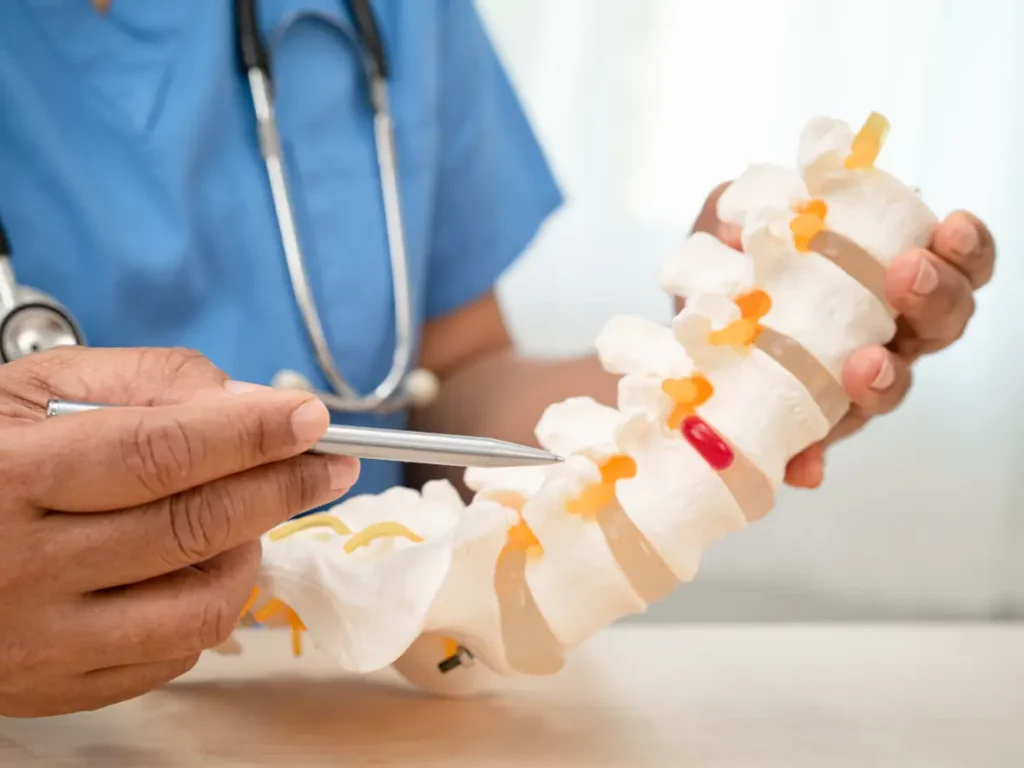
What Is Degenerative Disc Disease?
Treatments For Degenerative Disc Disease
Most patients are treated without surgery, so care begins with the least invasive options and advances only as needed.
Non-surgical care
- Physical therapy. Builds core strength and spinal support.
- Anti-inflammatory medication. Reduces pain during flare-ups.
- Activity modification. Better body mechanics and weight management reduce load on the discs.
- Image-guided injections. Calm an irritated nerve or joint.
Minimally invasive procedures
- Total Disc Revive. Disc repair for selected patients with discogenic pain.
- Fibrin disc repair. Seals tears in a damaged disc to support healing.
- Disc replacement. Preserves motion when a disc is severely worn.
- Fusion (TLIF). Stabilizes a painful, unstable segment.
Most procedures are performed same-day, on an outpatient basis. Your surgeon will recommend the least invasive option appropriate for your condition.
How Degenerative Disc Disease is Diagnosed

What Causes Degenerative Disc Disease?
Disc degeneration results from a combination of age, genetics, and mechanical load. Common contributing factors include:
Age-related changes
Discs gradually lose water content, height, and elasticity.
Genetic predisposition
Genetics strongly influence how early and how quickly discs wear.
Tobacco use
Reduces the blood supply and nutrition that discs depend on.
Repetitive heavy load
Years of lifting, bending, and twisting stress the discs.
Prior injury
A previous strain or trauma can accelerate wear at that level.
Elevated body weight
Extra weight increases the load on the lumbar discs.
What A Worn Disc Can Lead To
Disc degeneration is often the starting point for other spine conditions. Each has its own page with symptoms and treatment options.
Frequently Asked Questions
Is degenerative disc disease serious?
Usually not. Disc degeneration is a common part of aging, and many people have it on MRI without pain. It becomes clinically significant when a worn disc causes persistent pain or leads to a related problem such as a herniated disc or spinal stenosis.
Is degenerative disc disease actually a disease?
Not in the usual sense. The term describes age-related changes in the discs, including loss of water content and height. It is a description of wear rather than an illness that spreads.
Does degenerative disc disease get worse over time?
Disc wear tends to progress slowly with age, but pain does not always follow the same course. Many patients experience symptoms in flare-ups that are well controlled with an appropriate plan.
Can degenerative disc disease be cured?
The structural wear cannot be reversed, but the pain it causes can often be relieved. Many patients do well with conservative care, and disc repair, disc replacement, or fusion can address the source when needed.
What activities aggravate degenerative disc disease?
Heavy lifting with poor form, repeated bending and twisting, and prolonged sitting commonly aggravate discogenic pain. Staying active with good body mechanics usually helps more than rest.
How is the painful disc identified?
MRI shows which discs are worn, but because wear is common, a specialist correlates the imaging with the examination and the pattern of pain. In selected cases, diagnostic injections help confirm the source.
What are the surgical options for a worn disc?
For carefully selected patients, options include minimally invasive disc repair, disc replacement to preserve motion, and fusion to stabilize the segment. The choice depends on the level involved, the degree of wear, and the stability of the spine.
Are procedures for degenerative disc disease done same-day?
Most minimally invasive procedures at Total Spine and Orthopedics are performed on a same-day, outpatient basis. To schedule an evaluation in Melbourne, Orlando (Lake Nona), or Titusville, call (321) 499-4646.
Symptoms Of Degenerative Disc Disease
Many worn discs cause no symptoms. When they do, common signs include:
- Back or neck pain that comes and goes, often in flare-ups.
- Pain worse with sitting, bending, or lifting.
- Relief with walking or changing position.
- Stiffness, especially after rest.
- Radiating pain, numbness, or tingling into an arm or leg if a nerve becomes involved.
Degeneration can occur at any level, but the lower back and neck carry the most motion and load.
Lumbar (lower back)
- Most common at L4-L5 and L5-S1.
- Low back pain that can spread to the buttock.
- Can lead to sciatica if a nerve root is compressed.
Cervical (neck)
- Most common at C5-C6 and C6-C7.
- Neck pain and stiffness that may spread to the shoulder blade.
- Arm symptoms from a pinched nerve.
Seek immediate care for progressive weakness, foot drop, numbness in the groin or inner thighs, or any loss of bladder or bowel control.
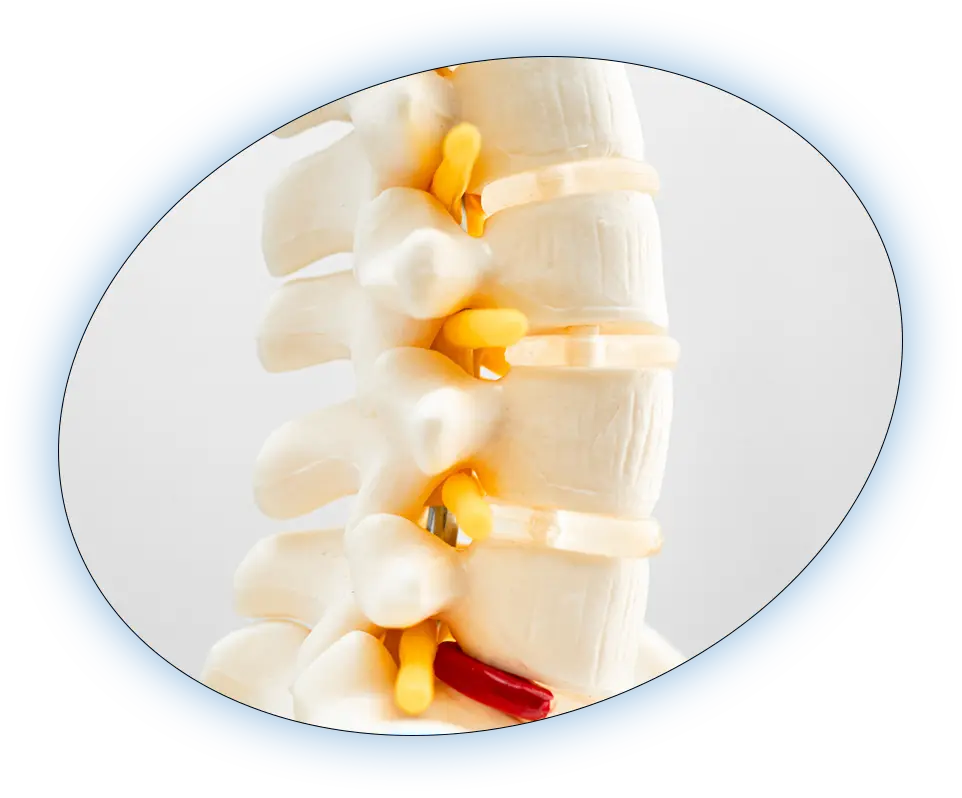
Related Conditions
When A Worn Disc Needs A Procedure
The Minimally Invasive Advantage
How ultra-minimally invasive and endoscopic procedures compare with traditional open surgery, and why most patients recover faster.
When a worn disc needs a procedure, minimally invasive techniques mean less pain, a smaller scar, and a faster return to everyday life.
Our Patients Stories
Hear our patients share their experience with us, All in their own words.
Why Choose Total Spine and Orthopedics
Expert, ultra-minimally invasive spine and orthopedic care, close to home.
Ultra-minimally invasive and endoscopic techniques
We specialize in procedures performed through incisions smaller than a dime, sparing muscle and supporting a faster recovery.
Same-day, outpatient procedures
Most patients walk in and return home within hours, rather than facing an overnight hospital stay.
Board-certified, fellowship-trained surgeons
Our team includes early leaders in endoscopic spine surgery.
A complimentary MRI review
Understand your diagnosis and options from a board-certified specialist before committing to any treatment.
Trusted by our community
More than 1,100 patient reviews at a 4.6-star average, and over 50,000 patients treated.
Motion-preserving options, not only fusion
From disc repair to disc replacement, we look for the option that treats the source and keeps you moving.
Comprehensive spine and orthopedic care
From injections to advanced procedures, your full continuum of care is handled in one place.
Convenient locations across the Space Coast and Orlando
Care close to home in Melbourne, Orlando (Lake Nona), and Titusville.
Schedule your visit online