
Shoulder pain can disrupt sleep, limit movement, and weaken your ability to perform daily tasks. Whether you are an athlete, an office worker, or living with aging joints, understanding the root cause is the key to regaining function. Most shoulder pain improves with conservative care, and advanced options are available when it does not.

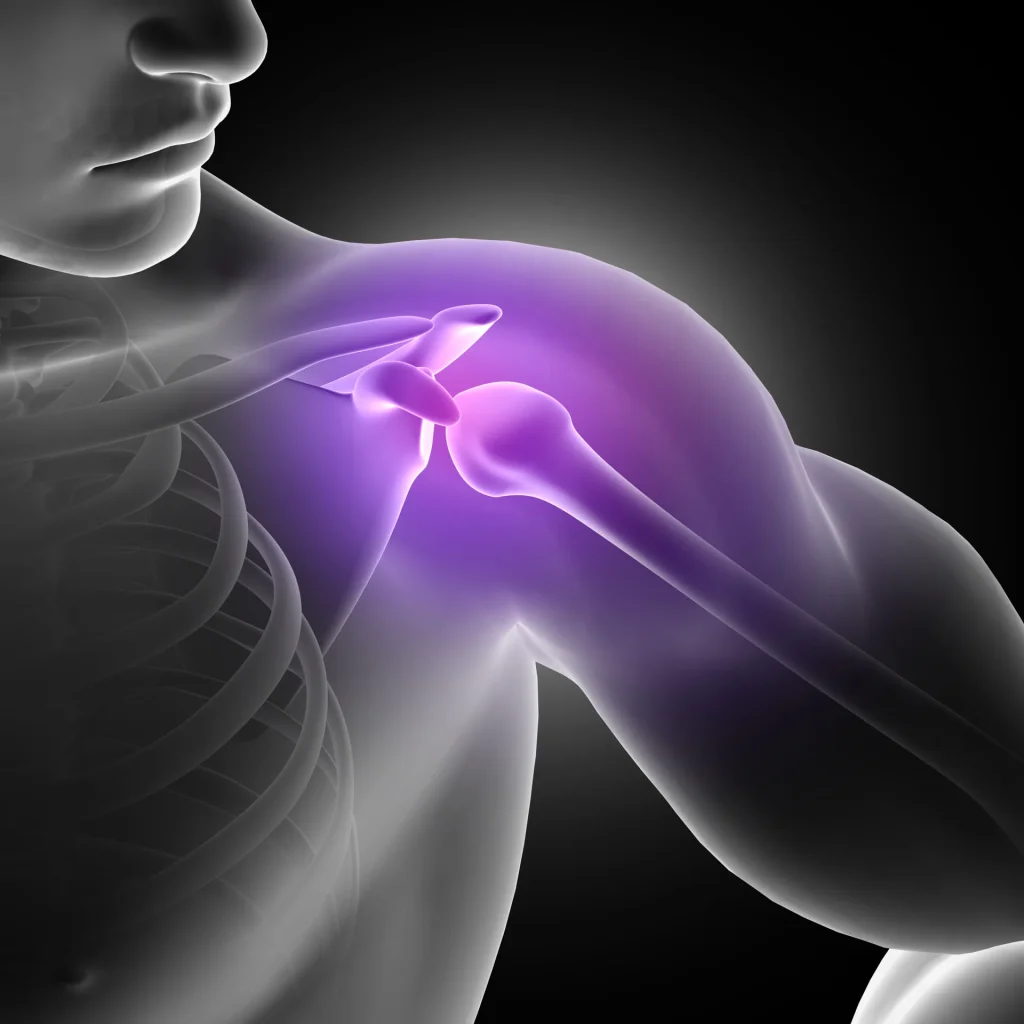
Treatment depends on the cause. Most patients start with conservative care and advance only as needed.
Non-surgical and regenerative care
Surgical options
Our physicians recommend the least invasive option appropriate for the cause of your pain.

Shoulder pain is usually a sign of an underlying problem. Common causes include:
Tears and strains are leading causes of persistent shoulder pain.
Injuries
Falls, sports accidents, and impacts causing fractures, sprains, or dislocations.
Overuse and repetitive strain
Lifting, throwing, or extended computer use.
Arthritis and bursitis
Chronic joint conditions causing stiffness and discomfort.
Frozen shoulder
Stiffness and loss of motion that can worsen without treatment.
Nerve compression
A pinched nerve in the neck; see neck pain.
Even minor shoulder pain can hold you back, and ignoring it can lead to lasting problems.
Daily life
Everyday limits
Trouble reaching overhead or carrying objects, weaker grip, and sleep disrupted by lying on the affected side.
Work
Productivity
Desk jobs and physical work both strain the shoulder and reduce comfort and focus.
Long term
Health risks
Neck, back, and posture problems, and progression to frozen shoulder or arthritis.
Common causes include rotator cuff injuries, overuse and repetitive strain, arthritis, bursitis, frozen shoulder, labral tears, injuries such as dislocations and fractures, and pinched nerves in the neck.
Yes. Nerve compression in the cervical spine can cause pain that radiates from the neck into the shoulder and arm, often with numbness or tingling.
Frozen shoulder (adhesive capsulitis) is stiffening and thickening of the shoulder joint capsule that causes pain and progressive loss of motion. It tends to worsen without treatment.
See a specialist if pain lasts more than a few weeks, limits your movement, wakes you at night, or follows an injury. Sudden shoulder or arm pain with chest pressure or shortness of breath needs emergency care.
Yes. Rest, stretching and strengthening, ice or heat, posture changes, physical therapy, injections, and regenerative treatments such as PRP help many patients.
Regenerative treatments such as PRP and stem cell therapy may help selected tendon, ligament, and arthritis problems. A consultation determines whether you are a candidate.
Surgery such as arthroscopic repair or shoulder replacement is considered for large tears, instability, or advanced arthritis that does not respond to conservative care.
A physical examination of motion, strength, and stability comes first, with X-rays, ultrasound, or MRI to confirm the cause. Call (321) 499-4646 to schedule.
Shoulder pain can be acute or chronic. See a specialist when you notice:

How arthroscopic (keyhole) surgery of the shoulder compares with traditional open surgery.
When shoulder pain needs surgery, arthroscopic techniques repair many problems through small incisions, with a quicker start to rehabilitation.
Hear our patients share their experience with us, All in their own words.
Expert, ultra-minimally invasive spine and orthopedic care, close to home.
Ultra-minimally invasive and endoscopic techniques
We specialize in procedures performed through incisions smaller than a dime, sparing muscle and supporting a faster recovery.
Same-day, outpatient procedures
Most patients walk in and return home within hours, rather than facing an overnight hospital stay.
Board-certified, fellowship-trained surgeons
Our team includes early leaders in endoscopic spine surgery.
A complimentary MRI review
Understand your diagnosis and options from a board-certified specialist before committing to any treatment.
Trusted by our community
More than 1,100 patient reviews at a 4.6-star average, and over 50,000 patients treated.
Shoulder care from therapy to surgery
From regenerative injections to arthroscopic repair, we treat the cause of your shoulder pain.
Comprehensive spine and orthopedic care
From injections to advanced procedures, your full continuum of care is handled in one place.
Convenient locations across the Space Coast and Orlando
Care close to home in Melbourne, Orlando (Lake Nona), and Titusville.