
An ankle sprain is one of the most common foot and ankle injuries. It happens when the ligaments that support the ankle are stretched or torn, often after twisting or rolling the ankle. Even a “simple” sprain can lead to long-term problems if the ligaments do not heal properly. The right care helps you recover fully and lowers the risk of repeat injuries.


Most ankle sprains heal well without surgery. Treatment protects the ligaments while they heal, then restores strength and balance.
Early care
Recovery and persistent problems
Rehabilitation matters as much as rest. Skipping it is a common reason sprains keep coming back.

Ankle sprains usually happen when the foot lands or turns awkwardly. Common causes and risk factors include:
Sports and exercise
Jumping, cutting, and pivoting in sports like basketball, soccer, and tennis.
Uneven ground
Stepping off a curb or onto an uneven surface.
A previous sprain
Stretched ligaments make another sprain more likely.
Foot structure
A high-arched (cavus) foot can tip the ankle outward.
Footwear
Unsupportive shoes or high heels.
Weakness and fatigue
Weak muscles and poor balance reduce ankle control.
Ankle sprains are graded by how badly the ligaments are damaged. The grade guides treatment and recovery time.
Grade 1
Mild
The ligament is stretched. Mild pain and swelling; walking is usually possible. Often improves within one to three weeks.
Grade 2
Moderate
The ligament is partly torn. More swelling and bruising, with some looseness. Often three to six weeks with a brace and therapy.
Grade 3
Severe
The ligament is fully torn. Significant swelling and instability. Recovery can take several months.
Recovery times vary. This information is for educational purposes only and is not a substitute for a consultation with a licensed healthcare professional.
An ankle sprain is a stretched or torn ligament in the ankle, usually from rolling, twisting, or turning the ankle. Most sprains affect the ligaments on the outside of the ankle.
Sprains and fractures can look alike, with pain, swelling, and bruising. Pain directly over the bone, a deformity, or being unable to take four steps are signs that an X-ray is needed.
A mild sprain often improves within one to three weeks. Moderate and severe sprains can take six weeks to several months, especially before returning to sports.
Gentle, protected weight bearing is usually encouraged as soon as pain allows, often with a brace or boot. If you cannot bear weight at all, have the ankle evaluated.
A brace or wrap supports the ligaments while they heal and is often used for sports for several months afterward to lower the risk of another sprain.
A high ankle sprain injures the ligaments above the ankle joint that connect the two lower leg bones. It usually takes longer to heal than a typical sprain and needs careful evaluation.
Repeated sprains, or a sprain that did not heal well, can leave the ligaments stretched and the ankle unstable. This is called chronic ankle instability and is treatable.
Rarely. Most sprains heal with bracing and rehabilitation. Surgery may be considered for chronic instability or damage inside the joint that does not improve with conservative care.
Symptoms depend on how severe the sprain is. They may include:
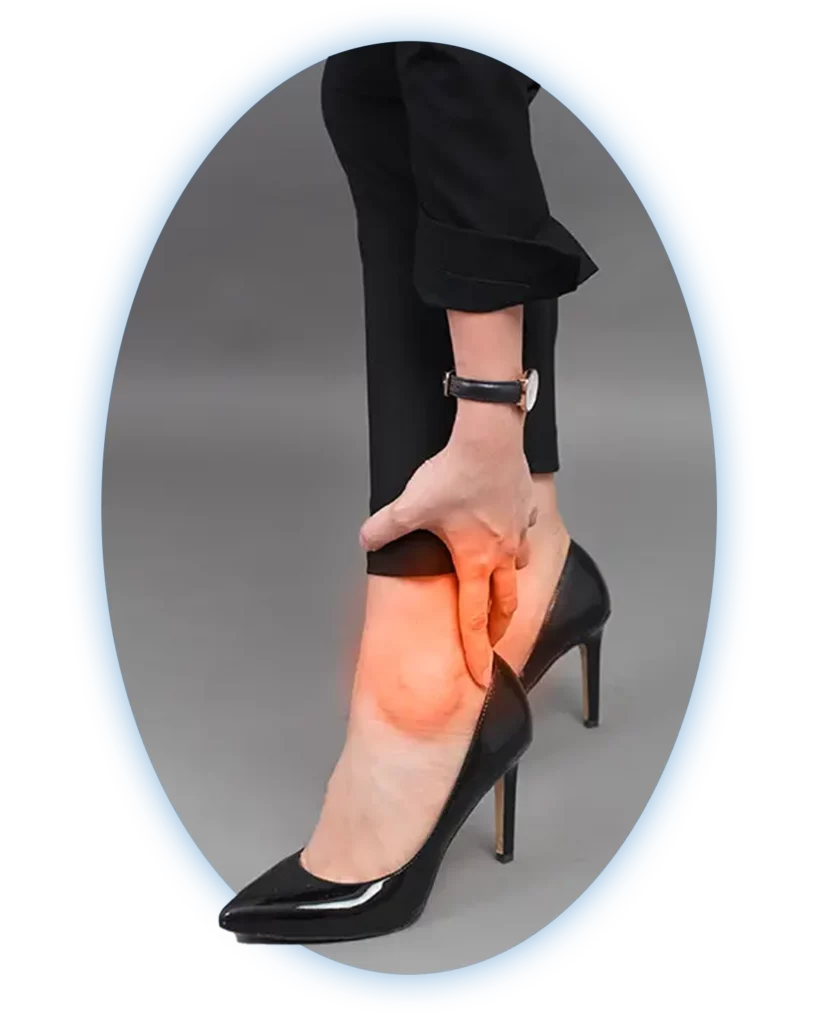
Most sprains heal fully. When they do not, the ankle can become chronically unstable.
Typical sprain
Heals with care
Pain and swelling fade over weeks.
Chronic ankle instability
Needs an evaluation
The ankle keeps rolling or "giving way."
Chronic instability usually improves with focused rehabilitation and bracing. When it does not, surgical stabilization of the ligaments may be considered.
Hear our patients share their experience with us, All in their own words.
Expert, ultra-minimally invasive spine and orthopedic care, close to home.
Ultra-minimally invasive and endoscopic techniques
We specialize in procedures performed through incisions smaller than a dime, sparing muscle and supporting a faster recovery.
Same-day, outpatient procedures
Most patients walk in and return home within hours, rather than facing an overnight hospital stay.
Board-certified, fellowship-trained surgeons
Our team includes early leaders in endoscopic spine surgery.
A complimentary MRI review
Understand your diagnosis and options from a board-certified specialist before committing to any treatment.
Trusted by our community
More than 1,100 patient reviews at a 4.6-star average, and over 50,000 patients treated.
Foot and ankle specialists
Our foot and ankle team treats ankle injuries from mild sprains to chronic instability, with conservative care first.
Comprehensive spine and orthopedic care
From injections to advanced procedures, your full continuum of care is handled in one place.
Convenient locations across the Space Coast and Orlando
Care close to home in Melbourne, Orlando (Lake Nona), and Titusville.