
Neck Pain
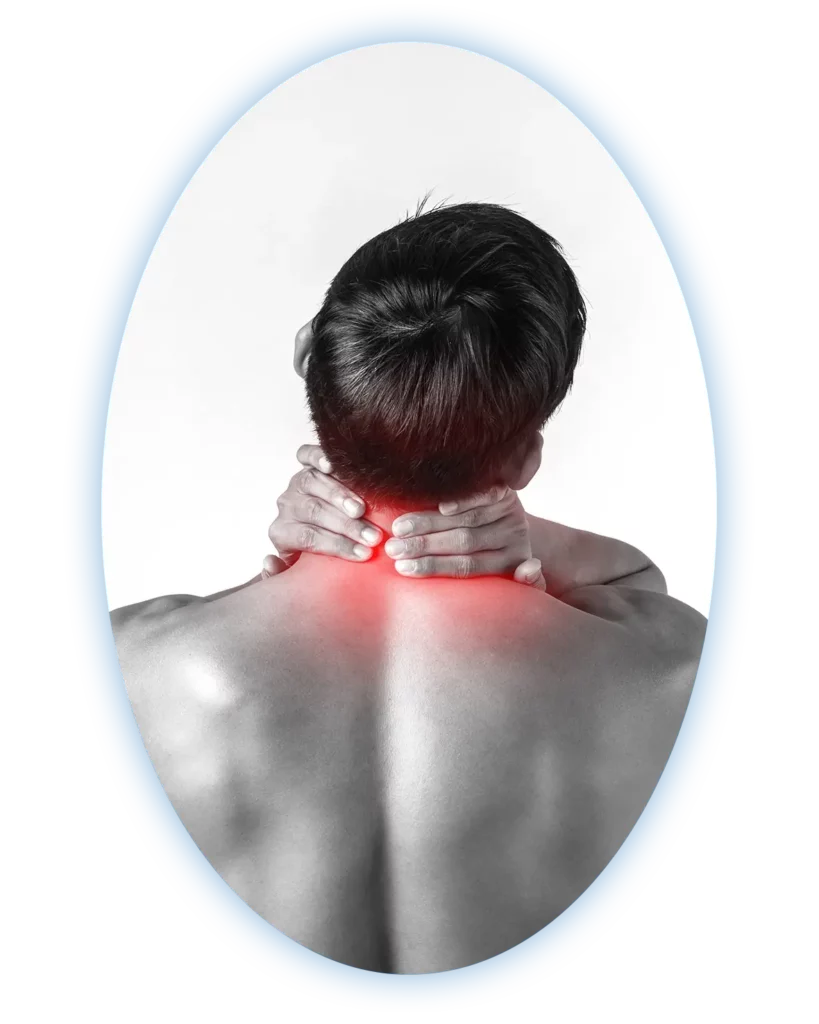
Most adults experience neck pain at some point, from a stiff neck after sleeping awkwardly to the persistent ache of a spine condition. Most neck pain improves within a few weeks with conservative care. When it persists, or when pain, numbness, or tingling travels into the arm, identifying the precise source in the cervical spine is the key to effective treatment.


What Causes Neck Pain?
Treatments For Neck Pain
Most neck pain is treated without surgery, so care begins with the least invasive options and advances only as needed.
Non-surgical care
- Heat, ice, and activity modification. Ease acute pain and muscle spasm.
- Physical therapy. Posture correction, traction, and strengthening.
- Medication. Anti-inflammatories and muscle relaxants.
- Steroid injections. Calm an inflamed nerve or joint.
- Occipital nerve block. For headaches that start in the neck.
Minimally invasive procedures
- Endoscopic spine surgery. Decompresses a nerve through a tiny incision.
- Cervical disc replacement. Replaces a damaged disc and preserves motion.
- ACDF. Removes a damaged disc and stabilizes the level.
- Foraminotomy. Widens a narrowed nerve opening.
Many cervical procedures are performed same-day. Your surgeon will recommend the least invasive option appropriate for your condition.
How Neck Pain is Diagnosed

Common Sources Of Neck Pain
Neck pain can start in the muscles, discs, joints, or nerves. Common sources include:
Muscle or ligament strain
From posture, screen use, sleep position, or overuse.
Disc material presses on a nerve root, often causing arm pain.
Worn facet joints and bone spurs cause stiffness and aching.
A compressed nerve root refers pain into the shoulder and arm.
A sudden back-and-forth motion, often from a car accident.
Narrowing that crowds the nerves or the spinal cord.
Where Neck Nerve Pain Travels
When a cervical nerve root is compressed, symptoms follow a predictable pattern into the arm. This helps identify the level involved.
C5 nerve
C4-C5 level
Shoulder and upper arm pain; weakness lifting the arm.
C6 nerve
C5-C6 level
Pain to the thumb side of the forearm; numbness in the thumb and index finger.
C7 nerve
C6-C7 level
Pain to the back of the arm; numbness in the middle finger.
C8 nerve
C7-T1 level
Numbness in the ring and little fingers; weakness of grip.
Patterns overlap between people. An examination and MRI confirm the level.
Frequently Asked Questions
When should I be concerned about neck pain?
Most neck pain is not serious and improves within several weeks. See a specialist if pain lasts more than a couple of weeks, keeps returning, radiates into the arm, or comes with numbness or weakness. Seek immediate care for hand weakness, balance problems, or loss of bladder or bowel control.
Why does neck pain cause arm pain or tingling?
A cervical nerve root can be compressed by a herniated disc or bone spur. When this happens, pain, numbness, or tingling often follows the nerve into the shoulder, arm, or hand. This pattern is called cervical radiculopathy.
Does neck pain usually require surgery?
No. Most neck pain improves with conservative care. Surgery is considered only when imaging shows a clear source and symptoms have not responded to other treatment.
What is the difference between fusion and disc replacement for the neck?
Both remove a damaged disc that is compressing a nerve. Anterior cervical discectomy and fusion (ACDF) joins the two vertebrae, while cervical disc replacement places an artificial disc that preserves motion. The right choice depends on the anatomy and the levels involved.
Can poor posture cause lasting neck problems?
Postural strain is a common cause of acute neck pain. Over time, sustained strain can contribute to wear of the discs and joints, so postural correction and strengthening are part of many treatment plans.
Can neck pain cause headaches?
Yes. Irritated joints and muscles in the upper neck can refer pain to the back of the head (cervicogenic headache). Occipital nerve blocks are one option for selected patients.
What is cervical myelopathy?
Cervical myelopathy is compression of the spinal cord in the neck. Signs include hand clumsiness, difficulty with buttons or handwriting, balance problems, and changes in walking. It needs prompt evaluation.
How is neck pain diagnosed?
A clinical history and an examination of strength, reflexes, and sensation come first. X-rays, MRI, and nerve tests help pinpoint the source when symptoms persist or involve the arm. Total Spine and Orthopedics offers a complimentary MRI review; call (321) 499-4646.
Symptoms Of Neck Pain
Neck pain can be sharp or dull and may come with symptoms beyond the neck. Common signs include:
- Sharp pain or a dull ache in the neck.
- Stiffness and reduced range of motion.
- Radiating pain or tingling into the shoulder, arm, or hand.
- Numbness or weakness in the arm or hand.
- Headaches that start at the base of the skull.
Most neck pain improves with rest and over-the-counter medication. See a specialist if it is severe or lasts more than a week or two.
Usually muscular
- Stiffness after sleeping or long periods at a screen.
- Pain stays in the neck and upper shoulders.
- Improves within days to a few weeks.
Possibly nerve-related
- Pain, numbness, or tingling down the arm (radiculopathy).
- Weakness in the arm or grip.
- Pain that persists beyond several weeks.
Seek immediate care for progressive arm or hand weakness, difficulty with balance or walking, clumsy hands, or any loss of bladder or bowel control.
Fusion Or Disc Replacement?
When a damaged cervical disc needs surgery, both procedures remove the disc and relieve pressure on the nerve. They differ in what replaces it.
ACDF
Fusion
The two vertebrae heal together
- A long-established, reliable procedure.
- Suited to many levels, arthritis, and instability.
- Learn more about ACDF.
Cervical disc replacement
Motion preserving
An artificial disc keeps the level moving
- Maintains natural neck motion at the treated level.
- Best suited to selected patients without significant arthritis.
- Learn more about disc replacement.
Your surgeon will review which option fits your anatomy and the number of levels involved.
Related Conditions
When Neck Pain Needs A Procedure
The Minimally Invasive Advantage
How ultra-minimally invasive and endoscopic procedures compare with traditional open surgery, and why most patients recover faster.
When neck pain needs a procedure, minimally invasive and endoscopic techniques mean less pain, a smaller scar, and a faster return to everyday life.
Our Patients Stories
Hear our patients share their experience with us, All in their own words.
Why Choose Total Spine and Orthopedics
Expert, ultra-minimally invasive spine and orthopedic care, close to home.
Ultra-minimally invasive and endoscopic techniques
We specialize in procedures performed through incisions smaller than a dime, sparing muscle and supporting a faster recovery.
Same-day, outpatient procedures
Most patients walk in and return home within hours, rather than facing an overnight hospital stay.
Board-certified, fellowship-trained surgeons
Our team includes early leaders in endoscopic spine surgery.
A complimentary MRI review
Understand your diagnosis and options from a board-certified specialist before committing to any treatment.
Trusted by our community
More than 1,100 patient reviews at a 4.6-star average, and over 50,000 patients treated.
Finding the true source of neck pain
We pinpoint whether pain comes from a disc, joint, or nerve before recommending treatment, including motion-preserving options.
Comprehensive spine and orthopedic care
From injections to advanced procedures, your full continuum of care is handled in one place.
Convenient locations across the Space Coast and Orlando
Care close to home in Melbourne, Orlando (Lake Nona), and Titusville.
Schedule your visit online