
The sacroiliac (SI) joints connect the base of the spine to the pelvis, and SI joint dysfunction is a common, often overlooked source of chronic low back pain. It can result from aging, injury, pregnancy, or stress from a prior spine surgery. Most patients improve with conservative care and injections, and minimally invasive SI joint fusion is available when pain persists.

Treatment depends on the root cause, and most patients start with conservative care.
Non-surgical care
Minimally invasive procedures
Your physician will recommend the least invasive option appropriate for the cause of your pain.
SI joint pain can result from wear, injury, or abnormal stress on the joint. Common causes include:
Arthritis
Age-related wear of the joint cartilage.
Injury
A fall onto the buttock, car accident, or sports injury.
Pregnancy
Hormonal loosening of the ligaments and weight changes stress the joint.
Gait or leg length differences
Uneven walking patterns load one joint more.
Prior lumbar fusion
A fused lower spine transfers extra motion to the SI joints.
Inflammatory arthritis
Conditions such as ankylosing spondylitis can inflame the joint.
SI joint pain and lower back nerve pain feel similar, but the pattern of symptoms helps tell them apart.
SI joint
Joint pain
From the sacroiliac joint
Lumbar spine
Nerve pain
From a disc or compressed nerve
Both can occur together. A diagnostic injection is the most reliable way to confirm the SI joint as the source.
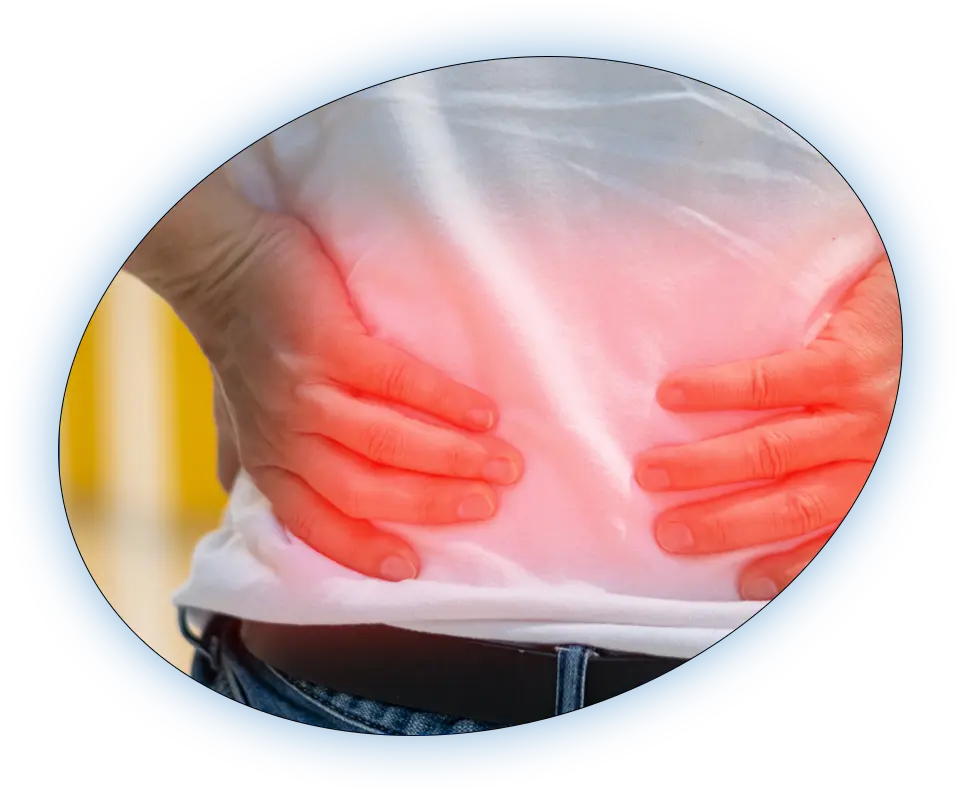
SI joint pain is usually a dull, aching pain low in the back or buttock, often on one side, that may spread into the groin or thigh. It commonly worsens with prolonged sitting, climbing stairs, standing on one leg, or rolling over in bed.
The sacroiliac joint is a common and often overlooked source of chronic low back pain, potentially responsible for up to about 24 percent of cases.
A physical examination with specific provocation tests helps identify the SI joint as the source. Imaging such as MRI, X-ray, or CT rules out other causes, and an image-guided diagnostic injection into the joint can confirm the diagnosis.
SI joint pain is usually felt below the belt line and in the buttock, and rarely travels below the knee. Pain from a herniated disc more often radiates down the leg past the knee with numbness or tingling.
Yes. Physical therapy, anti-inflammatory medication, a pelvic support belt, and SI joint injections relieve symptoms for many patients. Radiofrequency ablation may provide longer relief for selected patients.
Minimally invasive SI joint fusion is considered when the SI joint has been confirmed as the pain source and conservative care, including injections, has not provided lasting relief. It stabilizes the joint through a small incision.
Common causes include arthritis of the joint, injury from a fall or accident, pregnancy, a difference in leg length or gait, and a prior lumbar fusion that places extra stress on the joint.
Many minimally invasive SI joint fusions are performed on a same-day or short-stay basis. To schedule an evaluation in Melbourne, Orlando (Lake Nona), or Titusville, call (321) 499-4646.
It is common for SI joint pain to affect only one side. Symptoms can include:
How ultra-minimally invasive and endoscopic procedures compare with traditional open surgery, and why most patients recover faster.
When SI joint pain needs a procedure, minimally invasive fusion means a small incision, less pain, and a faster recovery than traditional open surgery.
Hear our patients share their experience with us, All in their own words.
Expert, ultra-minimally invasive spine and orthopedic care, close to home.
Ultra-minimally invasive and endoscopic techniques
We specialize in procedures performed through incisions smaller than a dime, sparing muscle and supporting a faster recovery.
Same-day, outpatient procedures
Most patients walk in and return home within hours, rather than facing an overnight hospital stay.
Board-certified, fellowship-trained surgeons
Our team includes early leaders in endoscopic spine surgery.
A complimentary MRI review
Understand your diagnosis and options from a board-certified specialist before committing to any treatment.
Trusted by our community
More than 1,100 patient reviews at a 4.6-star average, and over 50,000 patients treated.
Finding the overlooked source
Because SI joint pain mimics disc and nerve pain, we confirm the source before recommending treatment.
Comprehensive spine and orthopedic care
From injections to advanced procedures, your full continuum of care is handled in one place.
Convenient locations across the Space Coast and Orlando
Care close to home in Melbourne, Orlando (Lake Nona), and Titusville.