
A SLAP (Superior Labrum Anterior and Posterior) tear is a shoulder injury that affects the top of the labrum, the cartilage that surrounds the shoulder socket, where the biceps tendon attaches. It usually results from a fall or a sports injury. Many SLAP tears improve with physical therapy, and arthroscopic surgery is available for severe cases.
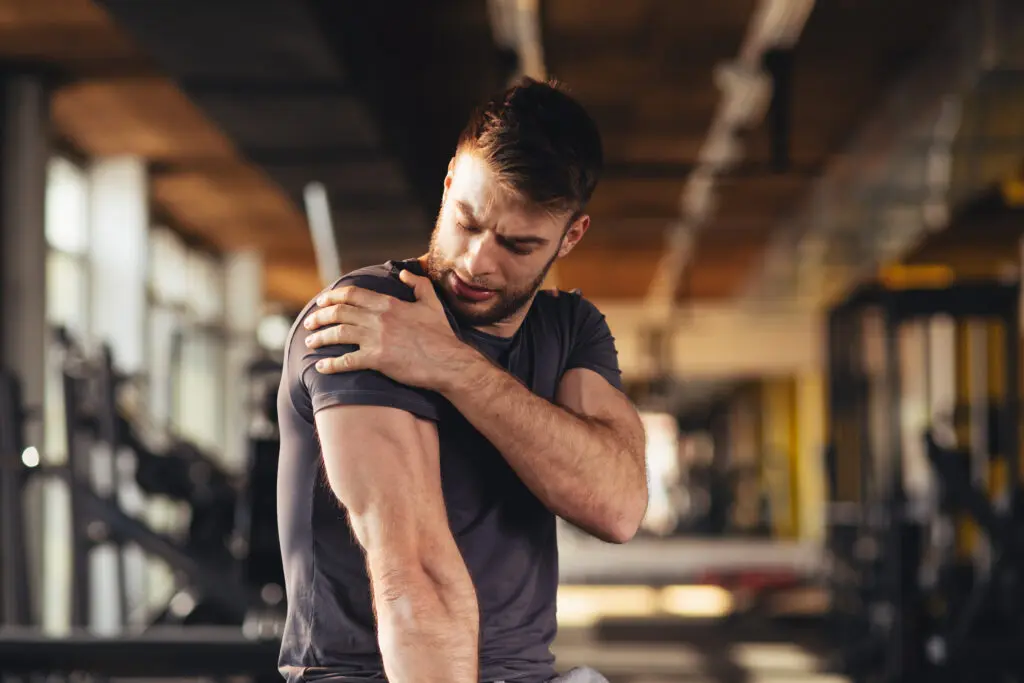

Treatment depends on the severity of the injury and the patient's symptoms.
Non-surgical care
Surgical options
Surgery is typically recommended for severe cases or for patients who have not responded to other treatment.

A SLAP tear usually follows a traumatic event or repetitive overhead stress. Common causes include:
A fall on an outstretched arm
Drives the ball of the shoulder into the labrum.
Throwing sports
Repetitive overhead throwing in baseball, softball, and volleyball.
Heavy lifting
Lifting heavy objects, especially overhead.
Shoulder dislocation
The force of a dislocation can tear the labrum.
A sudden pull
A sudden jerk on the arm, such as catching a falling object.
Age-related wear
The labrum frays with age, especially after 40.
Recovery time after surgery varies, and physical therapy is typically necessary to regain strength and range of motion.
Weeks 0 to 4
Protect the repair
A sling and gentle, guided motion.
Weeks 4 to 12
Restore motion and strength
Physical therapy to regain range of motion and build strength.
Months 3 to 6
Return to activity
Most patients return to normal activities; throwing sports may take longer.
Timelines depend on the repair and your activity level.
SLAP stands for Superior Labrum Anterior and Posterior. It describes a tear at the top of the shoulder labrum that extends from front to back, where the biceps tendon attaches.
Symptoms include dull or sharp shoulder pain, difficulty lifting and reaching overhead, a popping, clicking, or catching sensation, and reduced throwing velocity or strength.
SLAP tears usually result from a traumatic event such as a fall on an outstretched arm or a sports injury, or from repetitive overhead motion such as throwing. They can also develop with age.
Their symptoms overlap with other shoulder problems such as rotator cuff tears and impingement, so a careful examination and imaging are needed.
Diagnosis involves a physical examination and imaging such as MRI or an arthrogram, an X-ray or MRI taken after dye is injected into the joint.
Not always. Physical therapy may be enough to relieve symptoms and allow a full recovery. Surgery is recommended for severe cases or when other treatment has not helped.
The most common surgery is arthroscopy, performed through small incisions. The damaged labrum is repaired or removed, and the joint is checked for other problems.
Most patients return to normal activities within a few weeks to a few months, depending on activity level. Physical therapy is necessary to regain strength and motion. Call (321) 499-4646 to schedule.
Symptoms of a SLAP tear include:

How arthroscopic (keyhole) surgery of the shoulder compares with traditional open surgery.
Arthroscopic SLAP repair is performed through small incisions, and the joint is checked for any other issues during the same procedure.
Hear our patients share their experience with us, All in their own words.
Expert, ultra-minimally invasive spine and orthopedic care, close to home.
Ultra-minimally invasive and endoscopic techniques
We specialize in procedures performed through incisions smaller than a dime, sparing muscle and supporting a faster recovery.
Same-day, outpatient procedures
Most patients walk in and return home within hours, rather than facing an overnight hospital stay.
Board-certified, fellowship-trained surgeons
Our team includes early leaders in endoscopic spine surgery.
A complimentary MRI review
Understand your diagnosis and options from a board-certified specialist before committing to any treatment.
Trusted by our community
More than 1,100 patient reviews at a 4.6-star average, and over 50,000 patients treated.
Experts in shoulder care
Our physicians diagnose and treat all kinds of shoulder problems, from therapy to arthroscopic repair.
Comprehensive spine and orthopedic care
From injections to advanced procedures, your full continuum of care is handled in one place.
Convenient locations across the Space Coast and Orlando
Care close to home in Melbourne, Orlando (Lake Nona), and Titusville.