
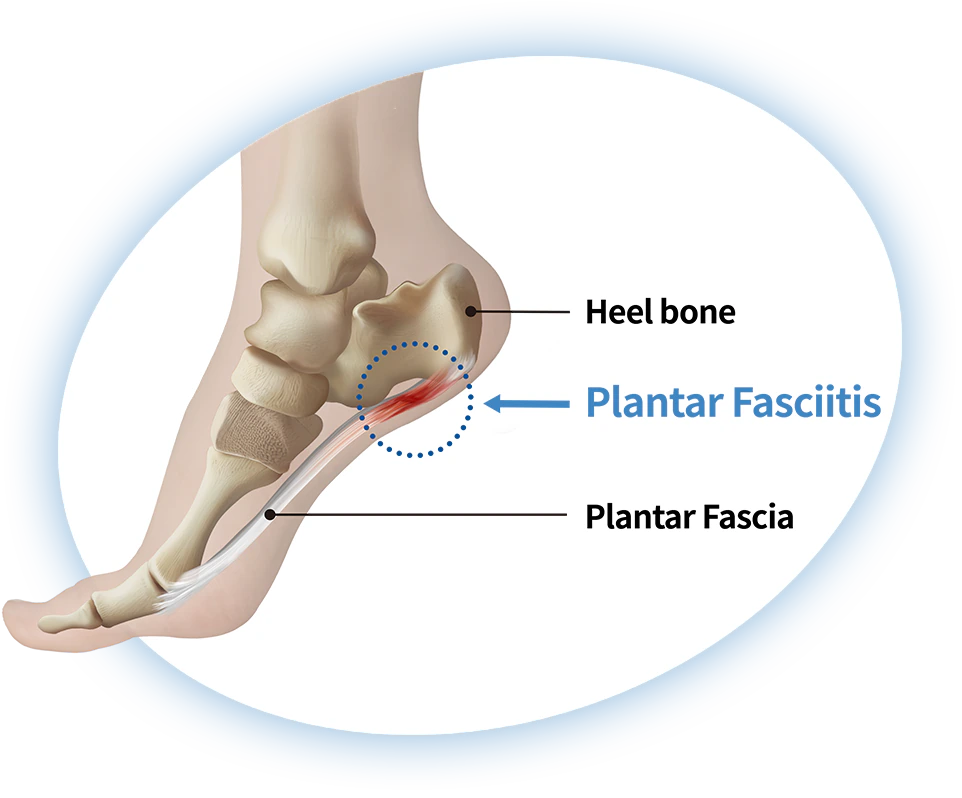
Plantar fasciitis is one of the most common causes of heel pain. Many people improve with rest, stretching, orthotics, or injections, but chronic cases may need more. Endoscopic plantar fascia release uses a small incision and a camera to relieve the strain on the plantar fascia, with a quicker recovery than open surgery.

Endoscopic plantar fascia release may be considered when:
Chronic heel pain
Plantar fasciitis has lasted many months.
Conservative care has failed
Rest, stretching, orthotics, and injections have not helped.
Activity is limited
Heel pain keeps you from walking, working, or exercise.
The diagnosis is confirmed
An examination and imaging confirm plantar fasciitis.

During endoscopic plantar fascia release:
A small incision
A small incision is made near the heel.
Camera visualization
A thin endoscopic camera is inserted for a clear view.
Release
A specialized instrument releases a portion of the plantar fascia.
Closing
The incision is closed with minimal stitches, often without large bandages.
Home the same day
The procedure typically takes under an hour.
This information is for educational purposes only and is not a substitute for a consultation with a licensed physician.
Plantar fasciitis is inflammation of the plantar fascia, the thick band of tissue running across the bottom of the foot. It is one of the most common causes of heel pain, often worst with the first steps in the morning.
Endoscopic plantar fascia release (EPFR) uses a small incision and a camera-guided instrument to partially release the tight plantar fascia, reducing strain and pain.
Surgery is considered for chronic plantar fasciitis when conservative care, such as rest, stretching, orthotics, or injections, has not relieved symptoms over many months.
The procedure is typically completed in under an hour, and many patients go home the same day.
Most patients can bear weight shortly after the procedure and gradually increase activity as healing progresses, though this varies by patient.
Smaller incisions and less tissue disruption, a shorter recovery, and a lower risk of complications compared with open surgery.
The incision is closed with minimal stitches, often without the need for large bandages.
If chronic heel pain is limiting your life and conservative treatments have not worked, call (321) 499-4646 to schedule a consultation.
Compared with traditional open surgery, endoscopic plantar fascia release offers:

How minimally invasive foot and ankle surgery compares with traditional open surgery.
Recovery after endoscopic release is generally quicker than with open surgery, and most patients bear weight shortly after the procedure.
Hear our patients share their experience with us, All in their own words.
Expert, ultra-minimally invasive spine and orthopedic care, close to home.
Ultra-minimally invasive and endoscopic techniques
We specialize in procedures performed through incisions smaller than a dime, sparing muscle and supporting a faster recovery.
Same-day, outpatient procedures
Most patients walk in and return home within hours, rather than facing an overnight hospital stay.
Board-certified, fellowship-trained surgeons
Our team includes early leaders in endoscopic spine surgery.
A complimentary MRI review
Understand your diagnosis and options from a board-certified specialist before committing to any treatment.
Trusted by our community
More than 1,100 patient reviews at a 4.6-star average, and over 50,000 patients treated.
Advanced foot and ankle treatments
We specialize in minimally invasive foot and ankle care focused on restoring mobility.
Comprehensive spine and orthopedic care
From injections to advanced procedures, your full continuum of care is handled in one place.
Convenient locations across the Space Coast and Orlando
Care close to home in Melbourne, Orlando (Lake Nona), and Titusville.