
Trigger finger release opens the tight pulley at the base of a finger or thumb so the tendon can glide freely again. It is considered when catching or locking continues despite rest, splinting, and injections, and it is a short outpatient procedure through a small incision.


This procedure is used for the following conditions. Each links to its own page with symptoms and other treatment options.

Trigger finger release is a short outpatient procedure:
Local anesthesia
The palm and finger are numbed.
A small incision
A small incision is made in the palm at the base of the finger.
Releasing the pulley
The tight pulley is divided so the tendon can glide.
Checking motion
The finger is moved to confirm it no longer catches.
Closing
The incision is closed with a small dressing.
Recovery after trigger finger release is usually quick.
Same day
Move the finger
Gentle bending and straightening is encouraged right away.
First weeks
Light use
Light activities resume; palm soreness gradually settles.
Following weeks
Full use
Most patients return to full hand use; therapy helps if stiffness remains.
Trigger finger release is a procedure that opens the tight pulley at the base of the finger or thumb so the flexor tendon can glide freely, stopping the catching and locking.
It is considered when trigger finger persists despite rest, splinting, and steroid injections, or when the finger locks in a bent position.
It is a short outpatient procedure performed with local anesthesia. Your surgeon will explain the setting and technique for your case.
The release is performed through a small incision in the palm at the base of the affected finger or thumb.
Most patients are encouraged to move the finger right away and resume light use within days. Soreness in the palm can last a few weeks.
Recurrence in the same finger after a complete release is uncommon, although trigger finger can develop in other fingers.
Most patients do not, but hand therapy may help if the finger is stiff after surgery, especially after long-standing locking.
An examination of the finger usually makes the diagnosis. Call (321) 499-4646 to schedule.
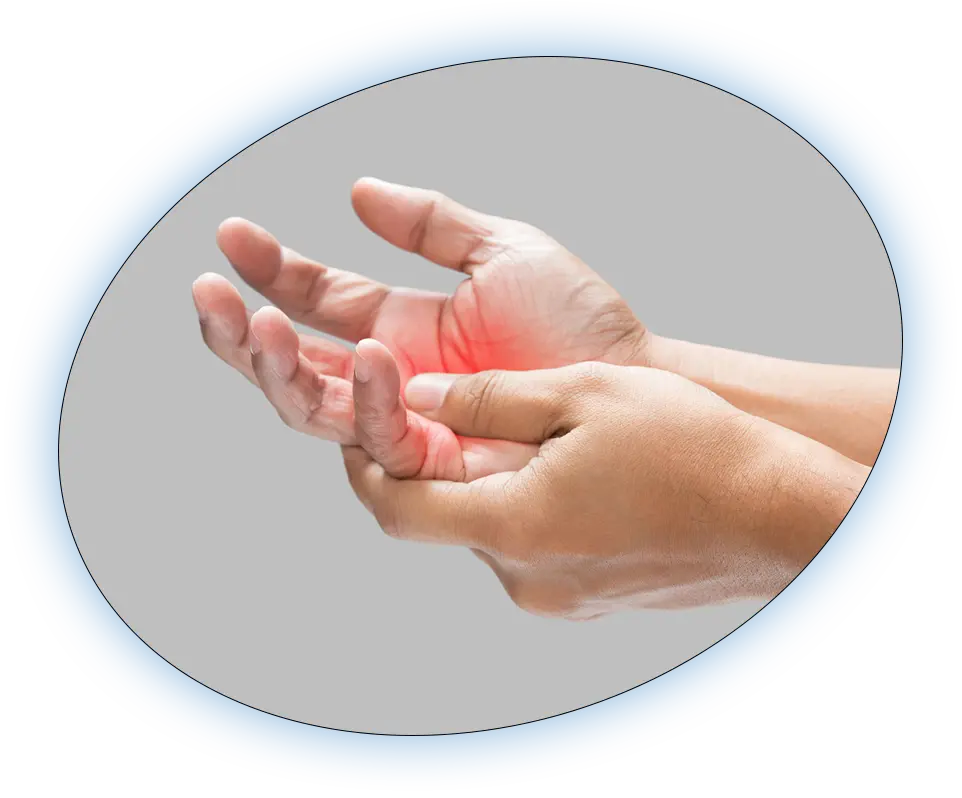
Releasing the pulley can relieve:
How non-surgical care compares with trigger finger release.
Most patients improve with conservative treatment, and a release is considered when it does not work.
Hear our patients share their experience with us, All in their own words.
Expert, ultra-minimally invasive spine and orthopedic care, close to home.
Ultra-minimally invasive and endoscopic techniques
We specialize in procedures performed through incisions smaller than a dime, sparing muscle and supporting a faster recovery.
Same-day, outpatient procedures
Most patients walk in and return home within hours, rather than facing an overnight hospital stay.
Board-certified, fellowship-trained surgeons
Our team includes early leaders in endoscopic spine surgery.
A complimentary MRI review
Understand your diagnosis and options from a board-certified specialist before committing to any treatment.
Trusted by our community
More than 1,100 patient reviews at a 4.6-star average, and over 50,000 patients treated.
Orthopedic hand care close to home
Our orthopedic surgeons and physicians treat hand conditions in Melbourne, Orlando, and Titusville.
Comprehensive spine and orthopedic care
From injections to advanced procedures, your full continuum of care is handled in one place.
Convenient locations across the Space Coast and Orlando
Care close to home in Melbourne, Orlando (Lake Nona), and Titusville.